

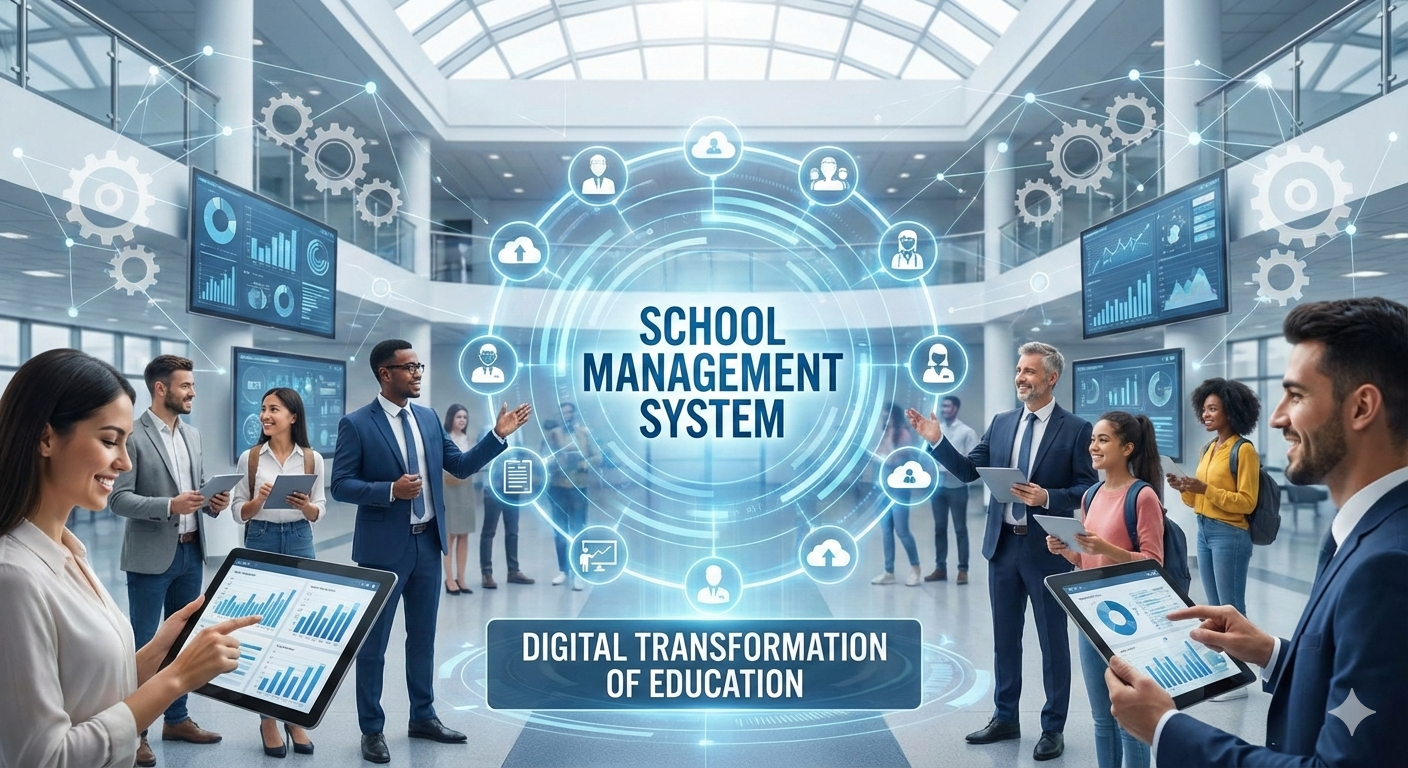
Introduction to School Management System with Digital Transformation in Education
School Management Systems Education is changing faster than ever. Just a decade ago, classrooms were filled with chalkboards, attendance registers, and paper-based report cards. Today, we are talking about smart classrooms, virtual learning, and cloud-based records. This shift isn’t just about technology—it’s about survival. Schools that fail to adapt risk being left behind.
What Is Digital Transformation in Schools?
Digital transformation in education means using technology to improve teaching, learning, and administration. It’s not just about having computers. It’s about integrating digital tools into every process—from admissions and attendance to exams and parent communication.
Think of it like upgrading from a bicycle to a high-speed train. Both move you forward, but one does it faster, smarter, and more efficiently.
Why Schools Need to Go Digital Now
Students today are digital natives. They live online. They learn online. So why should school systems remain stuck in paperwork? The demand for transparency, speed, and accessibility has made digital transformation essential—not optional.
And at the center of this transformation? School management systems.
Importance of School Management System in Modern Schools
Modern schools are like complex ecosystems. There are students, teachers, administrators, parents, and management—all interacting daily. Managing this manually is like trying to control traffic without signals. Chaos is inevitable.
Traditional Administration vs Digital Administration
Traditional administration depends heavily on paperwork. Files pile up. Errors multiply. Time is wasted.
Digital administration, powered by a school management system, centralizes everything. Records are stored securely. Data is accessible instantly. Reports are generated in seconds.
Which one would you prefer?
Core Components of a Modern School Management System
A modern system typically includes:
-
Student information management
-
Attendance tracking
-
Fee management
-
Examination management
-
Communication portals
-
HR and payroll modules
These components work together like gears in a machine, ensuring smooth operations.
Digital Transformation in Education Sector with ERP

Enterprise Resource Planning (ERP) systems are no longer limited to corporate offices. Schools are now embracing ERP to unify their academic and administrative processes.
How ERP Connects Academic and Administrative Departments
An ERP system bridges gaps between departments. Admissions, finance, academics, and HR all operate on a single platform. This reduces duplication of work and ensures consistency.
Imagine having one dashboard that shows student performance, fee status, attendance trends, and teacher workload. That’s the power of ERP.
Centralized Data for Smarter Decision-Making
Data drives decisions. When all information is centralized, school leaders can make informed choices. Whether it’s hiring new staff or introducing new courses, data-backed decisions are always stronger.
Benefits of School Management Software in Education
Let’s talk about the real advantages. Why are schools investing in these systems?
Streamlined Communication
Communication gaps cause confusion. A school management system offers instant notifications, SMS alerts, emails, and app updates. Parents stay informed. Teachers stay organized.
No more “I didn’t know about the exam” excuses.
Data Security and Accuracy
Paper records are vulnerable to damage and loss. Digital systems offer encrypted storage, backups, and role-based access.
Accuracy improves dramatically because manual errors decrease.
Cost and Time Efficiency
Automation saves time. Time saves money. Tasks that once took hours now take minutes.
It’s like having an extra team working 24/7 without increasing payroll.
School Management Software for Administrative Automation
Administrative tasks can be exhausting. But automation changes everything.
Automating Attendance and Admissions
Biometric or online attendance tracking eliminates manual registers. Admission forms can be submitted online, reducing paperwork and queues.
Fee Management and Financial Tracking
Online fee payments simplify transactions. Automatic reminders reduce late payments. Financial reports become transparent and easy to generate.
HR and Payroll Automation
Managing teacher salaries, leaves, and appraisals becomes effortless with digital systems.
Administrative headaches? Reduced significantly.
How School ERP Supports Digital Learning
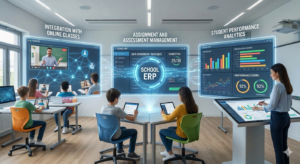
Education is not just about management. It’s about learning outcomes.
Integration with Online Classes
ERP systems integrate with virtual classrooms. Students can attend lectures, download study materials, and interact with teachers online.
Assignment and Assessment Management
Teachers can assign homework digitally. Students can submit online. Grades are recorded instantly.
Simple. Fast. Efficient.
Student Performance Analytics
Analytics help identify strengths and weaknesses. Schools can monitor progress in real time and intervene when needed.
Cloud-Based School Management System Benefits
Cloud technology has changed the game.
Anywhere, Anytime Access
Students, teachers, and parents can access information from any device. No need to be physically present on campus.
Data Backup and Security
Cloud systems offer automatic backups. Even if hardware fails, data remains safe.
Scalability for Growing Institutions
As schools expand, cloud systems scale effortlessly. No need for heavy infrastructure investments.
Improving School Efficiency Through Digital Solutions
Efficiency isn’t just about speed—it’s about doing things right.
Real-Time Reporting
Instant reports help administrators track attendance trends, financial performance, and academic results.
Paperless Campus Initiatives
Going paperless saves money and supports sustainability.
Enhanced Parent-Teacher Collaboration
Parent portals improve transparency and build trust.
Online School Management System Features and Advantages
Online platforms offer unmatched convenience.
Mobile Accessibility
Mobile apps allow instant updates and quick actions.
Customizable Dashboards
Different users see different dashboards based on roles.
Automated Notifications and Alerts
Automated reminders ensure nothing is missed.
Impact of School ERP on Academic Performance

Let’s address the most important question: Does it improve learning?
Yes.
Tracking Student Progress
Continuous tracking helps teachers adapt teaching methods.
Personalized Learning Insights
Data insights enable personalized interventions.
Early Identification of Academic Gaps
Struggling students are identified early, preventing long-term issues.
Challenges in Implementing School Management Systems
No transformation is without hurdles.
Resistance to Change
Some staff may resist new technology.
Training and Adoption Issues
Proper training ensures smooth adoption.
Future of School Management Systems in Education
The future looks exciting.
AI and Predictive Analytics
AI will predict performance trends and recommend improvements.
Smart Classrooms and IoT Integration
Connected devices will enhance learning environments.
Why Schools Should Invest in Digital Transformation Today
Waiting means falling behind.
Competitive Advantage
Digitally advanced schools attract more students.
Long-Term Sustainability
Efficient systems ensure sustainable growth.
Short Intro Call for Further Discussion
If you’re planning to transform your institution and want to explore how digital systems can improve efficiency and academic performance, let’s start the conversation. The future of education is digital—are you ready to be part of it?
Conclusion
The role of school management systems in digital transformation of education is undeniable. From administrative automation to enhanced academic performance, these systems reshape how institutions function. They reduce workload, improve communication, secure data, and most importantly, support better learning outcomes.
Digital transformation is not just a trend. It’s a necessity. Schools that embrace it today will lead tomorrow.
FAQs
1. How does a school management system improve efficiency?
It automates routine tasks, reduces paperwork, and provides real-time data access.
2. Is a cloud-based school management system secure?
Yes, cloud systems offer encrypted storage and regular backups for enhanced security.
3. Can school ERP improve academic performance?
Yes, through data analytics, progress tracking, and personalized learning insights.
4. What features should an online school management system have?
Attendance tracking, fee management, communication tools, analytics, and mobile access.
5. Why is digital transformation important in education?
It enhances operational efficiency, improves learning experiences, and prepares institutions for future challenges.
Leave a Reply