

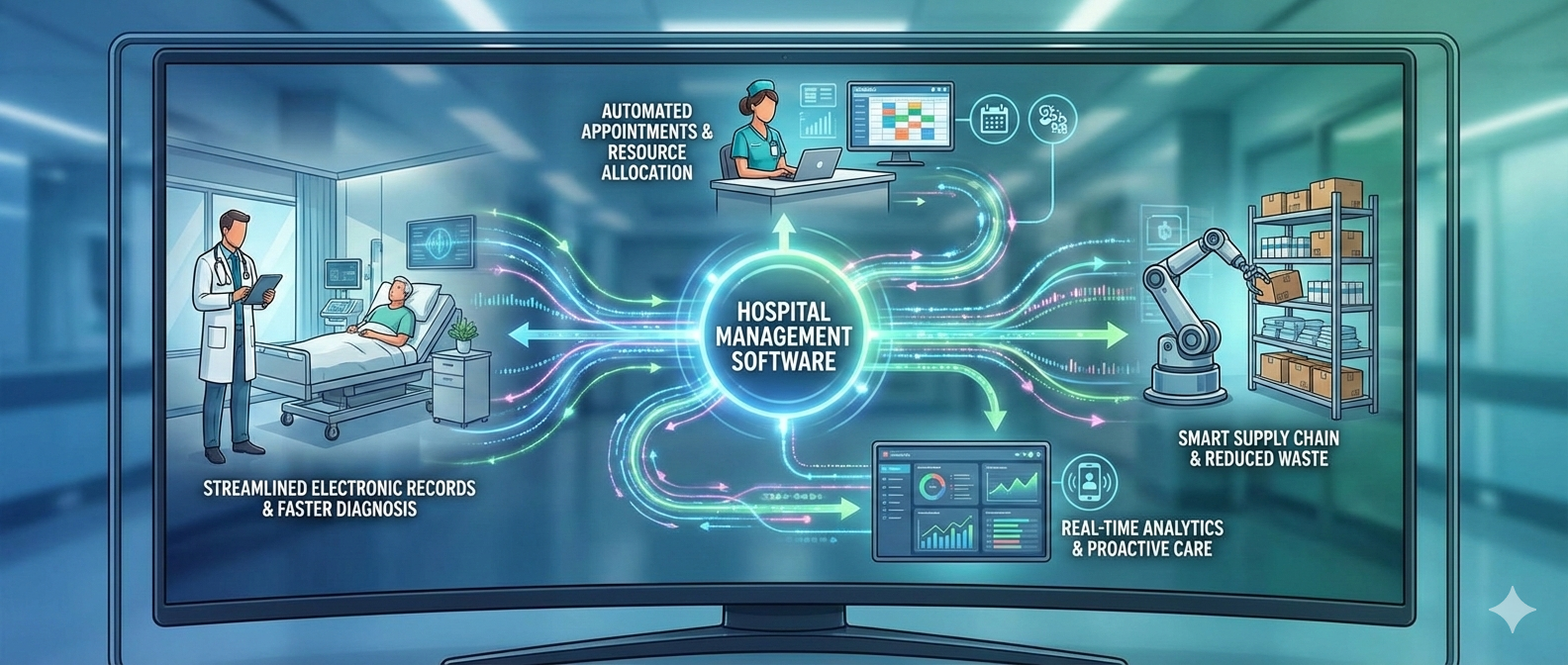
The Digital Backbone of Modern Healthcare
Healthcare today is no longer confined to stethoscopes, hospital beds, and paper files stacked behind a receptionist’s desk. The modern healthcare ecosystem is fast, complex, and data-driven. Hospitals juggle hundreds—sometimes thousands—of patients, staff members, departments, and operational tasks every single day. Managing all of this manually is like trying to run an airport using handwritten boarding passes. It’s inefficient, risky, and outdated.
This is where hospital management software steps in as the digital backbone of healthcare operations. It quietly works behind the scenes, connecting departments, automating routine tasks, organizing patient data, and helping healthcare providers focus on what truly matters—patient care. Instead of drowning in paperwork and administrative chaos, hospitals can operate with clarity, speed, and confidence.
The real magic lies in how hospital management software improves healthcare operations across the board. From front-desk scheduling to clinical workflows, billing processes, inventory control, and compliance, everything becomes more streamlined and transparent. Errors decrease. Productivity increases. Patients experience smoother care journeys. Staff feel less overwhelmed.
In a world where every second can impact a life, efficiency isn’t optional—it’s essential. As healthcare demands continue to grow, hospitals that embrace smart digital systems gain a powerful advantage. They don’t just survive; they thrive. Let’s explore how hospital management software is reshaping healthcare operations and setting new standards for efficiency, accuracy, and patient satisfaction.
Understanding Hospital Management Software
What Hospital Management Software Really Means
At its core, hospital management software is an integrated digital system designed to manage every operational aspect of a healthcare facility. Think of it as the central nervous system of a hospital—connecting departments, enabling communication, and ensuring that information flows seamlessly where it’s needed. Instead of isolated systems for billing, patient records, scheduling, and inventory, everything lives under one digital roof.
This software handles both clinical and non-clinical operations. On the clinical side, it manages patient records, doctor schedules, treatment histories, and diagnostics. On the administrative side, it covers billing, admissions, discharges, inventory management, staff coordination, and reporting. The goal is simple: replace fragmented processes with a unified, efficient system.
What makes hospital management software truly powerful is automation. Routine tasks that once took hours—like updating patient files or generating invoices—are completed in seconds. Staff spend less time on repetitive work and more time delivering quality care. Errors caused by manual data entry are dramatically reduced.
In essence, hospital management software transforms hospitals from reactive environments into proactive, well-organized ecosystems. It creates structure where there was once chaos and provides clarity where confusion used to live.
Core Objectives of Hospital Management Software
Every digital system in healthcare exists for a reason, and hospital management software is no exception. Its objectives go far beyond convenience. The primary goal is to improve healthcare operations by making them faster, safer, and more cost-effective.
One key objective is operational efficiency. By automating workflows, hospitals can eliminate bottlenecks that slow down patient care. Admissions, discharges, lab reports, and billing processes move smoothly, reducing delays and frustration for both staff and patients.
Another major objective is accuracy. Medical errors can be life-threatening, and administrative errors can be financially damaging. Hospital management software ensures accurate record-keeping, correct billing, and reliable reporting. Every piece of data is stored securely and updated in real time.
The software also aims to improve coordination. Hospitals are complex environments with multiple departments that must work together. A centralized system ensures that everyone—from doctors to nurses to administrative staff—is on the same page.
Ultimately, the core objective is better patient outcomes. When operations run smoothly behind the scenes, healthcare professionals can focus fully on delivering timely, high-quality care.
Evolution of Hospital Management Systems in Healthcare
Hospital management systems have come a long way from basic digital record-keeping. In the early days, hospitals used standalone systems that addressed only specific tasks, such as billing or patient registration. These systems didn’t communicate with one another, leading to data silos and inefficiencies.
As technology advanced, integrated systems emerged. These platforms brought multiple functions together, allowing departments to share information seamlessly. Over time, hospital management software evolved to include advanced features like real-time analytics, mobile access, and cloud-based storage.
Today’s systems are smarter, faster, and more adaptable. They support large healthcare networks, enable remote access, and provide deep insights through data analytics. The evolution reflects the growing complexity of healthcare and the increasing need for digital transformation.
How Hospital Management Software Improves Healthcare Operations
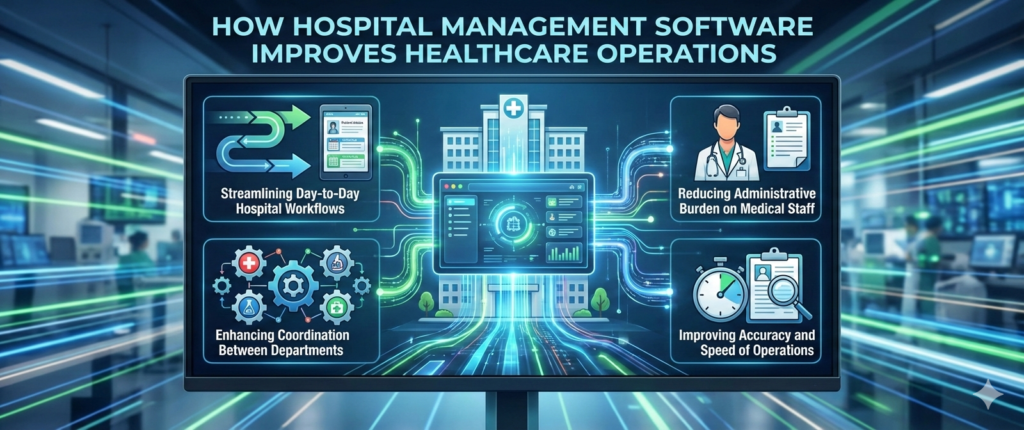
Streamlining Day-to-Day Hospital Workflows
One of the most significant ways hospital management software improves healthcare operations is by streamlining everyday workflows. Hospitals operate around the clock, handling admissions, consultations, diagnostics, treatments, and discharges. Without a structured system, even small inefficiencies can snowball into major delays.
Hospital management software automates repetitive tasks such as patient registration, appointment confirmations, and report generation. Instead of filling out forms manually, staff can access pre-filled digital records, saving time and reducing errors.
Workflow automation ensures that tasks move logically from one department to another. For example, when a doctor orders a test, the lab receives it instantly. Once results are ready, they’re automatically updated in the patient’s record. No phone calls. No paperwork. No waiting.
This seamless flow keeps operations running smoothly, even during peak hours. Staff feel less stressed, patients experience faster service, and the hospital operates like a well-oiled machine.
Enhancing Coordination Between Departments
Hospitals are like small cities, with departments functioning as individual neighborhoods. Without proper coordination, miscommunication is inevitable. Hospital management software acts as a bridge, connecting departments through a shared digital platform.
Doctors can instantly access lab results. Nurses receive real-time updates on patient status. Administrative teams can track admissions and discharges without chasing paperwork. Everyone works with the same up-to-date information.
This level of coordination reduces duplication of efforts and minimizes delays. When departments collaborate seamlessly, patient care becomes faster and more consistent. Coordination isn’t just about convenience—it’s about saving time and, in some cases, saving lives.
Reducing Administrative Burden on Medical Staff
Healthcare professionals didn’t choose their careers to spend hours on paperwork. Yet administrative tasks often consume a significant portion of their day. Hospital management software lifts this burden by automating documentation, scheduling, and reporting.
Doctors can update patient records with a few clicks. Nurses can track medication schedules digitally. Administrative staff can generate reports instantly. This reduction in paperwork allows medical professionals to focus on patient interaction and clinical decision-making.
When staff are less overwhelmed, morale improves. Burnout decreases. And the quality of care naturally rises. Reducing administrative burden isn’t just an operational win—it’s a human one.
Improving Accuracy and Speed of Operations
Speed and accuracy are critical in healthcare. Hospital management software ensures both by eliminating manual data entry and standardizing processes. Information is entered once and shared across departments, reducing the risk of inconsistencies.
Automated alerts notify staff of critical updates, such as abnormal test results or pending discharges. This rapid information flow helps healthcare providers act quickly and confidently.
In a fast-paced hospital environment, every second counts. By improving accuracy and speed, hospital management software creates a safer, more responsive healthcare system.
Centralized Patient Information for Better Care
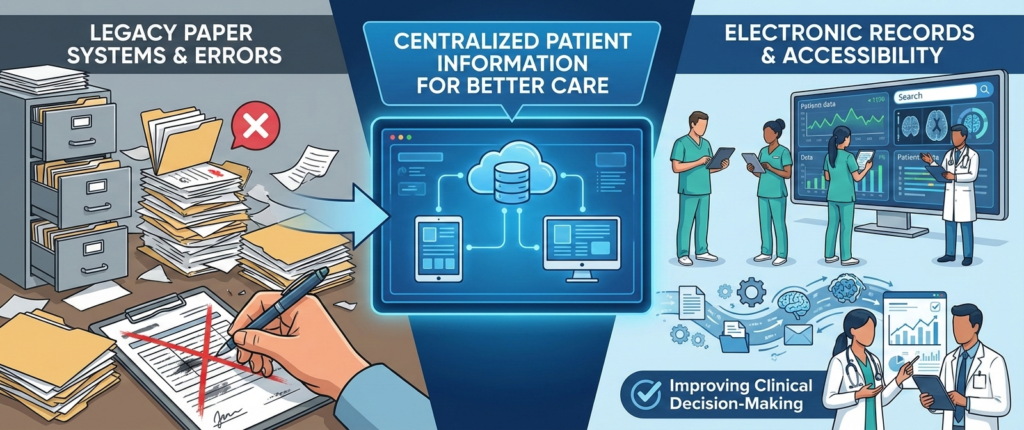
Electronic Patient Records and Data Accessibility
One of the most powerful ways hospital management software improves healthcare operations is by centralizing patient information into a single, easily accessible digital system. Gone are the days of thick paper files, misplaced reports, or hunting through cabinets for patient histories. With electronic patient records, everything—from medical history and diagnostic reports to prescriptions and treatment plans—is stored securely in one place.
This centralized access means authorized healthcare professionals can retrieve patient information instantly, regardless of department. A doctor in the emergency room can view past lab results, while a specialist can check treatment history without waiting for files to be transferred. This immediate access reduces delays and supports faster, more accurate clinical decisions.
Another major advantage is continuity of care. When patient data is consistent and up to date, every healthcare provider involved in treatment works from the same information. This minimizes misunderstandings, prevents repeated tests, and ensures that care plans are aligned.
In fast-paced hospital environments, quick access to reliable data can make all the difference. Centralized electronic records don’t just improve efficiency—they actively contribute to safer, smarter, and more personalized patient care.
Eliminating Paper-Based Errors
Paper-based systems are prone to errors. Handwritten notes can be misread, documents can be misplaced, and outdated information can lead to serious mistakes. Hospital management software significantly reduces these risks by digitizing all records and processes.
Digital forms enforce standardized data entry, which means fewer inconsistencies and missing details. Automated checks help catch errors before they become problems. For example, alerts can flag incomplete patient information or conflicting medication entries.
By eliminating paper trails, hospitals also reduce redundancy. There’s no need to re-enter the same information multiple times, which lowers the chances of discrepancies. Accuracy improves across departments, from admissions to billing to clinical care.
In healthcare, even small errors can have big consequences. Digital systems create a safer environment by ensuring data integrity at every step.
Improving Clinical Decision-Making
Better data leads to better decisions. Hospital management software provides clinicians with comprehensive patient insights, enabling informed decision-making in real time. Doctors can review trends in vital signs, past diagnoses, and treatment outcomes with just a few clicks.
Access to complete patient histories helps clinicians avoid unnecessary tests and choose more effective treatment options. When data is accurate and easily accessible, decisions are based on facts—not assumptions.
This improved decision-making directly impacts patient outcomes. Treatments become more precise, risks are reduced, and recovery times often improve. In this way, hospital management software doesn’t just support operations—it elevates clinical excellence.
Appointment Scheduling and Resource Optimization
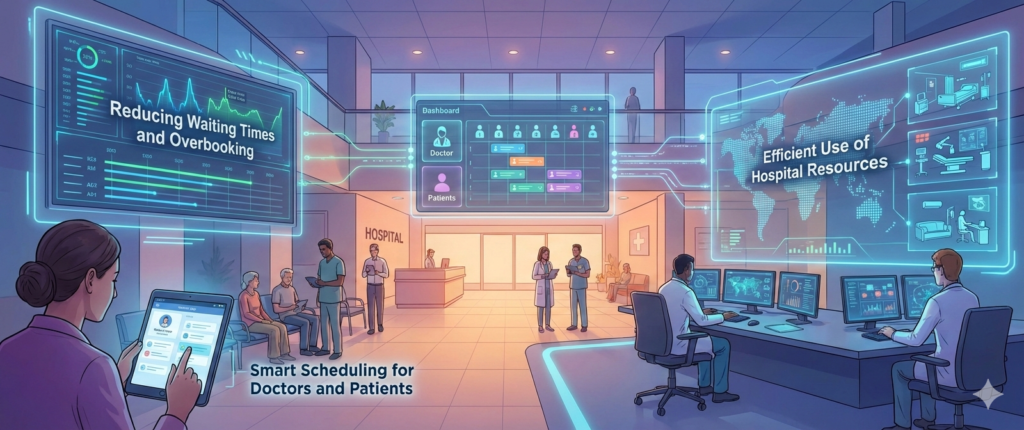
Smart Scheduling for Doctors and Patients
Scheduling is one of the most visible pain points in healthcare. Missed appointments, long wait times, and overbooked doctors frustrate everyone involved. Hospital management software improves healthcare operations by introducing smart, automated scheduling systems.
These systems balance doctor availability, patient needs, and department capacity. Appointments can be scheduled, rescheduled, or canceled digitally, reducing administrative workload and minimizing confusion. Automated reminders help patients remember appointments, cutting down on no-shows.
For doctors, smart scheduling ensures a balanced workload. Time slots are optimized to prevent burnout while maintaining productivity. Patients benefit from shorter waiting times and a smoother experience.
Efficient scheduling isn’t just about convenience—it’s about maximizing the value of every hour in a healthcare facility.
Reducing Waiting Times and Overbooking
Long waiting times are one of the most common patient complaints. Hospital management software addresses this by optimizing appointment flow and tracking real-time availability.
When delays occur, the system can adjust schedules dynamically. Staff can notify patients of changes instantly, improving transparency and satisfaction. Overbooking is reduced because the system tracks capacity accurately.
By managing time more effectively, hospitals can serve more patients without compromising quality. Reduced waiting times lead to happier patients and less stressed staff—a win-win situation.
Efficient Use of Hospital Resources
Hospital resources—beds, equipment, staff—are limited and valuable. Hospital management software provides visibility into resource availability, ensuring they’re used efficiently.
For example, bed management tools track admissions and discharges in real time, preventing bottlenecks. Equipment usage can be monitored to avoid shortages or idle assets.
This level of optimization reduces waste and ensures that resources are available when and where they’re needed most. Efficient resource management directly contributes to better patient care and cost savings.
Billing, Invoicing, and Financial Transparency
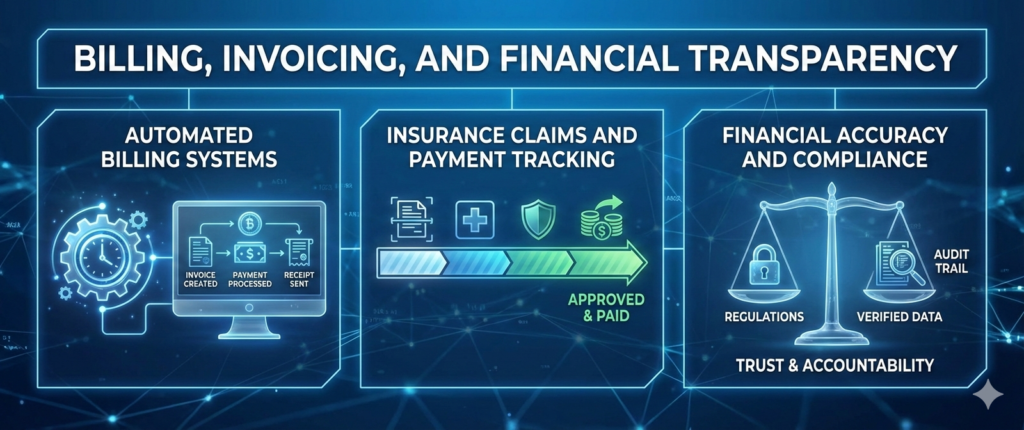
Automated Billing Systems
Billing errors can damage trust and disrupt cash flow. Hospital management software improves healthcare operations by automating billing processes, ensuring accuracy and consistency.
Charges are generated automatically based on services provided, reducing manual calculations. Invoices are clear, detailed, and delivered promptly. This transparency helps patients understand their bills and reduces disputes.
Automated billing also speeds up payment cycles, improving financial stability for healthcare facilities.
Insurance Claims and Payment Tracking
Managing insurance claims is complex and time-consuming. Hospital management software simplifies this process by tracking claims from submission to settlement.
The system ensures that claims are complete and compliant, reducing rejections. Payment tracking provides real-time visibility into outstanding balances and reimbursements.
This streamlined approach saves time, reduces administrative stress, and improves revenue management.
Financial Accuracy and Compliance
Financial compliance is critical in healthcare. Hospital management software maintains accurate records, generates audit-ready reports, and supports regulatory requirements.
With reliable financial data, hospitals can plan budgets, forecast expenses, and make informed investment decisions. Accuracy isn’t just about numbers—it’s about sustainability.
Inventory and Supply Chain Management
Managing Medical Supplies Efficiently
Medical supplies are the lifeline of hospital operations. Hospital management software tracks inventory levels in real time, ensuring essential items are always available.
Automated alerts notify staff when stock runs low, preventing shortages. Usage patterns help optimize ordering schedules and reduce waste.
Efficient inventory management ensures uninterrupted patient care and operational stability.
Preventing Stock Shortages and Overflows
Both shortages and overstocking are costly. Hospital management software strikes the perfect balance by providing data-driven insights into supply usage.
By analyzing trends, hospitals can predict demand accurately. This proactive approach reduces emergency purchases and storage issues.
The result is a lean, responsive supply chain that supports clinical excellence.
Cost Control Through Inventory Insights
Inventory data reveals opportunities for cost savings. Hospital management software highlights inefficiencies, such as expired supplies or underused items.
With better insights, hospitals can negotiate better deals, reduce waste, and allocate budgets more effectively. Cost control becomes strategic rather than reactive.
Enhancing Communication Across Healthcare Teams
Internal Communication Tools
Clear communication is essential in healthcare. Hospital management software includes internal messaging and notification tools that keep teams connected.
Doctors, nurses, and administrators can communicate securely and efficiently, reducing misunderstandings and delays.
Real-Time Alerts and Notifications
Real-time alerts ensure that critical information reaches the right people at the right time. Whether it’s lab results, patient status changes, or emergency updates, nothing gets lost.
These alerts improve responsiveness and support faster decision-making.
Improving Collaboration Between Departments
When departments collaborate effectively, patient care improves. Hospital management software creates a shared digital workspace where collaboration becomes effortless.
This unified approach strengthens teamwork and operational efficiency.
Data Security, Compliance, and Privacy
Protecting Sensitive Patient Information
Patient data is highly sensitive. Hospital management software uses advanced security measures to protect information from unauthorized access.
Encryption, access controls, and audit trails ensure data integrity and confidentiality.
Compliance With Healthcare Regulations
Regulatory compliance is non-negotiable. Hospital management software supports compliance by maintaining accurate records and generating required reports.
This reduces legal risks and builds trust with patients and regulators.
Building Patient Trust Through Secure Systems
When patients know their data is safe, trust grows. Secure systems reinforce confidence in healthcare providers and strengthen long-term relationships.
Analytics and Reporting for Smarter Decisions

Real-Time Operational Insights
Data analytics transform raw information into actionable insights. Hospital management software provides real-time dashboards that highlight performance trends.
These insights help administrators identify issues early and respond proactively.
Performance Metrics and KPIs
Key performance indicators reveal how well operations are running. Hospitals can track efficiency, patient satisfaction, and financial health with ease.
Data-driven decisions replace guesswork.
Predictive Analysis for Future Planning
Predictive analytics help hospitals prepare for the future. By analyzing historical data, systems can forecast demand, staffing needs, and resource requirements.
Planning becomes strategic and informed.
Patient Experience and Engagement
Patient Portals and Self-Service Tools
Hospital management software improves patient engagement through digital portals. Patients can book appointments, access records, and communicate with providers easily.
Self-service tools empower patients and reduce administrative workload.
Improving Satisfaction and Trust
When processes are smooth and transparent, patient satisfaction increases. Trust grows when patients feel informed and respected.
Positive experiences lead to better outcomes and stronger relationships.
Empowering Patients in Their Care Journey
Engaged patients are active participants in their care. Hospital management software supports this by providing access to information and communication tools.
Empowerment leads to better adherence and healthier outcomes.
Scalability and Flexibility for Growing Healthcare Facilities
Adapting to Hospital Growth
As hospitals grow, systems must scale. Hospital management software adapts to increased patient volumes and expanded services without disruption.
Customization and Integration Capabilities
Flexible systems can be customized to meet unique needs and integrate with existing tools. This adaptability ensures long-term value.
Supporting Multi-Location Healthcare Operations
For healthcare networks, centralized management across locations is essential. Hospital management software enables consistent operations and shared data.
Cost Efficiency and Long-Term ROI
Reducing Operational Costs
Automation reduces labor costs and minimizes errors. Over time, operational savings add up significantly.
Maximizing Staff Productivity
When staff work efficiently, productivity rises. Hospital management software enables teams to do more with less stress.
Long-Term Financial Benefits
The return on investment extends beyond finances. Improved care quality, patient satisfaction, and staff morale create lasting value.
Challenges in Implementing Hospital Management Software
Staff Training and Adoption
Change can be challenging. Proper training and support ensure smooth adoption and long-term success.
Data Migration and System Integration
Transitioning from old systems requires careful planning. Successful migration preserves data integrity and continuity.
Overcoming Resistance to Change
Clear communication and leadership help overcome resistance. When staff see benefits, acceptance grows naturally.
Future Trends in Hospital Management Software
AI and Automation in Healthcare Operations
Artificial intelligence enhances diagnostics, scheduling, and analytics. Automation continues to redefine efficiency.
Cloud-Based Hospital Systems
Cloud technology offers scalability, flexibility, and remote access, shaping the future of healthcare operations.
Data-Driven Personalized Healthcare
Personalized care powered by data analytics will become the norm, improving outcomes and patient satisfaction.
Get in Touch for learn more: Transforming Healthcare Operations Digitally
Why Hospitals Are Moving Toward Digital Solutions
Digital transformation isn’t optional anymore. Hospitals adopt hospital management software to stay competitive, compliant, and patient-focused.
Preparing Your Healthcare Facility for the Future
The future belongs to hospitals that embrace innovation. Now is the time to explore how hospital management software improves healthcare operations and drives sustainable growth.
The Smart Way Forward for Healthcare Operations
Hospital management software is no longer a luxury—it’s a necessity. By streamlining workflows, improving accuracy, enhancing patient experiences, and supporting data-driven decisions, it transforms healthcare operations from the inside out. Hospitals that invest in digital solutions position themselves for long-term success, better care delivery, and operational excellence. The path forward is clear, and it’s digital.
Frequently Asked Questions (FAQs)
- How does hospital management software improve healthcare operations daily?
It automates workflows, centralizes data, and improves coordination, making daily operations faster and more accurate. - Is hospital management software suitable for small healthcare facilities?
Yes, scalable solutions adapt to facilities of all sizes, offering flexibility and efficiency. - Can hospital management software reduce operational costs?
Absolutely. Automation, error reduction, and efficient resource management lower overall costs. - How secure is patient data in hospital management software?
Advanced security measures protect sensitive information and ensure compliance with regulations. - What is the long-term impact of hospital management software on patient care?Improved efficiency, accuracy, and engagement lead to better outcomes and higher patient satisfaction.
Leave a Reply