


New Year 2026 Ignites a Fresh Wave of New Code Software Technologies Powering the Next Digital Era

As the final seconds of 2025 ticked away, the planet collectively rebooted its calendar. Fireworks bloomed above city skylines, but the real spark was invisible: billions of lines of new code quietly compiling in data centers, edge nodes, orbital satellites, and pocket-sized devices. New Year 2026 is not merely a symbolic turn of the page; it is the ignition point for a convergence of software technologies that will define how the next decade computes, collaborates, and creates value. From adaptive compilers that rewrite themselves to photonic runtimes that trade electrons for light, the emerging stack is faster, safer, greener, and—most importantly—more human-centric than anything previously deployed at planetary scale.
This article maps that stack across nine decisive layers: programming languages, frameworks, runtimes, data fabrics, AI co-creation, security, distributed ledgers, immersive interfaces, and sustainability tooling. Every section is framed by the keywords “New Year 2026,” “New Code,” “Software Technologies,” and “Powering the Next Digital Era,” ensuring that the narrative stays laser-focused on the tectonic shift now under way. No brand names clutter the analysis; instead, patterns, protocols, and open specifications take center stage. The goal is to give builders, strategists, and curious minds a vendor-neutral field guide to the technologies that will dominate commits, roadmaps, and venture decks for the foreseeable future.
1. New Year 2026 Language Renaissance—New Code Syntaxes Powering the Next Digital Era
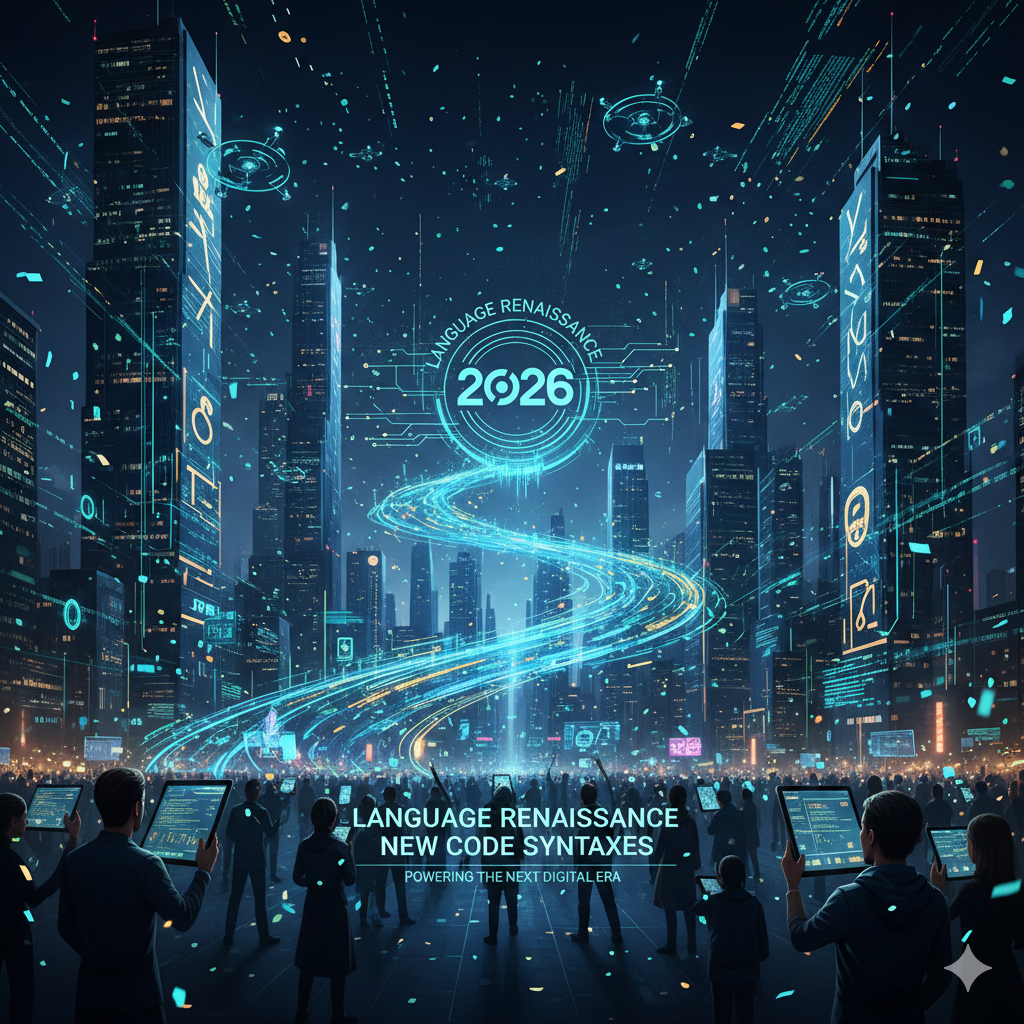
The first place any seismic shift in Software Technologies appears is inside compilers and interpreters. New Year 2026 introduces a language renaissance driven by three imperatives: memory-safe systems programming, quantum-ready classical bridges, and human-AI pair programming. The resulting syntaxes are not academic curiosities; they are New Code artifacts engineered for cross-domain portability.
Memory-Safe Systems Dialects
Traditional systems tongues still deliver unmatched performance, yet their undefined-behaviour foot-guns cost the global economy hundreds of billions in remediation. New Year 2026 variants enforce temporal safety at compile time through capabilities such as linear ownership, region-based allocators, and automatic proof-carrying modules. The payoff is binaries that run on bare metal without garbage collectors yet remain provably free of use-after-free and double-free bugs. Embedded, automotive, and aerospace pipelines adopt these dialects first, but the same New Code soon underpins serverless runtimes where nanosecond cold-start penalties matter.
Quantum-Classical Bridge Languages
Quantum hardware is moving from physics papers to rack-mounted appliances. Programming such machines demands expressions for superposition, entanglement, and unitary transforms alongside everyday control flow. New Year 2026 bridge languages embed quantum kernels as first-class citizens inside classical syntax. Developers can allocate qubits, apply gates, and measure results using familiar keywords, while the compiler targets hybrid LLVM-style intermediate representations. The result is Software Technologies that treat entanglement as ordinary as floating-point arithmetic, Powering the Next Digital Era of chemistry simulation, portfolio optimization, and cryptographic agility.
AI-Native Pair-Programming Grammars
Large language models have become co-authors rather than glorified autocomplete. New Year 2026 grammars are optimized for token predictability, allowing transformer-based assistants to propose entire function bodies with minimal context loss. Features such as mandatory doc-comments as code contracts, inline property-based tests, and automatic vulnerability linting compress the feedback loop between human intent and machine generation. The New Code emerging from these interactions is measurably more concise, better documented, and statistically less defect-prone, accelerating delivery timelines across open-source and enterprise repositories alike.
2. New Year 2026 Frameworks—New Code Abstractions Powering the Next Digital Era
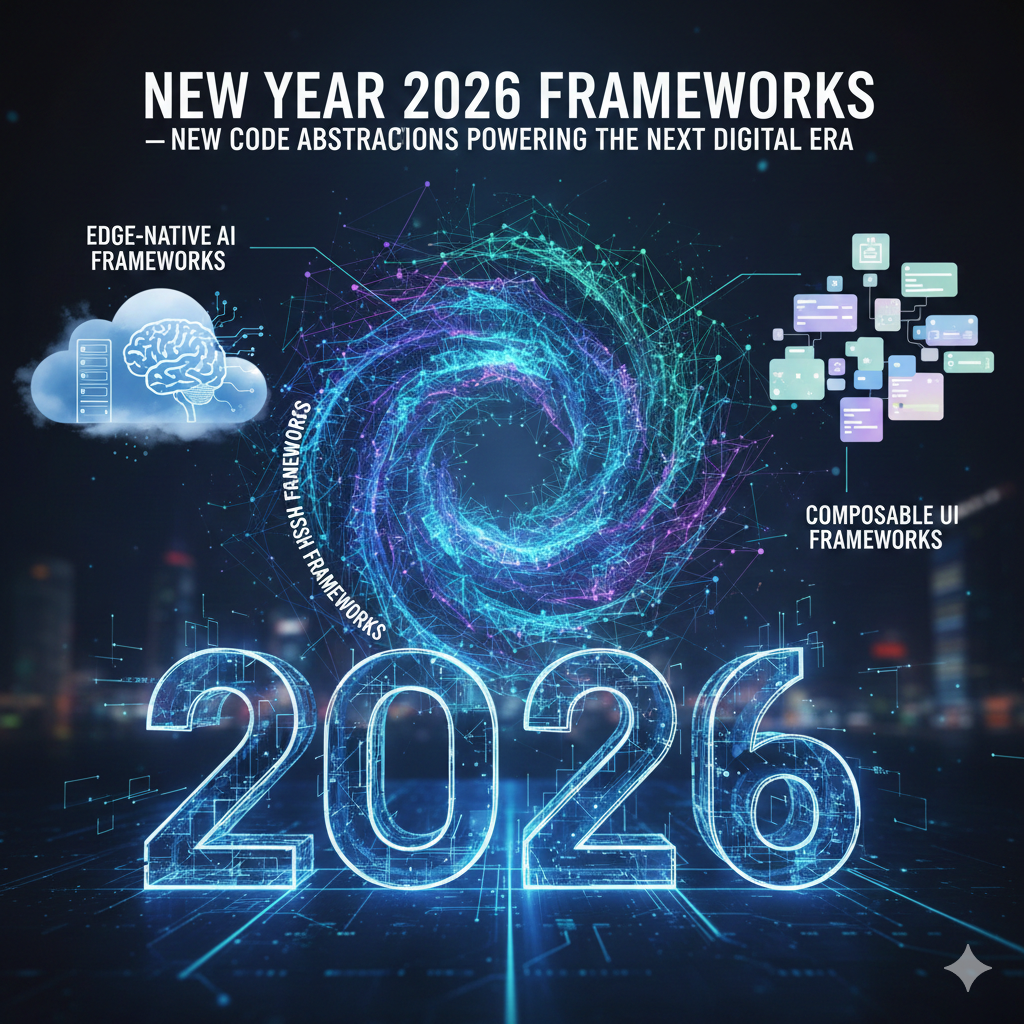
Frameworks encode architectural opinions at scale. In New Year 2026 they evolve from bloated monoliths into fine-grained, composable services that embrace declarative everything: data, state, security, and even carbon footprint.
Declarative Mesh Frameworks
Microservices sprawl created configuration jungles. New Code frameworks invert the problem: developers describe end-to-end system properties—latency percentiles, retry budgets, zero-trust posture—and the framework synthesizes manifests, sidecars, and policy objects. The resulting meshes are eventually consistent yet operationally observable, Powering the Next Digital Era where reliability is an input, not an afterthought.
Edge-Native AI Frameworks
Training colossal models in hyperscale farms is only half the story; inference at the edge is the multiplier. New Year 2026 frameworks package model pruning, quantization, and federated learning into declarative pipelines. A single annotation can trigger on-device personalization while guaranteeing differential privacy budgets. These Software Technologies turn every camera, router, and kiosk into an intelligent node, shrinking round-trip latency and respecting data-sovereignty statutes.
Composable UI Frameworks
User interfaces fragment across foldable phones, AR glasses, holographic displays, and in-vehicle windscreens. Rather than rewrite frontends per target, New Code UI frameworks adopt multi-modal adaptive rendering. Developers describe interaction flows in an intermediate markup; the runtime compiles to tactile widgets, voice grammars, or 3-D tiles on the fly. Accessibility and localization become compile-time proofs, not wish-list items, Powering the Next Digital Era of inclusive ambient computing.
3. New Year 2026 Runtimes—New Code Execution Engines Powering the Next Digital Era
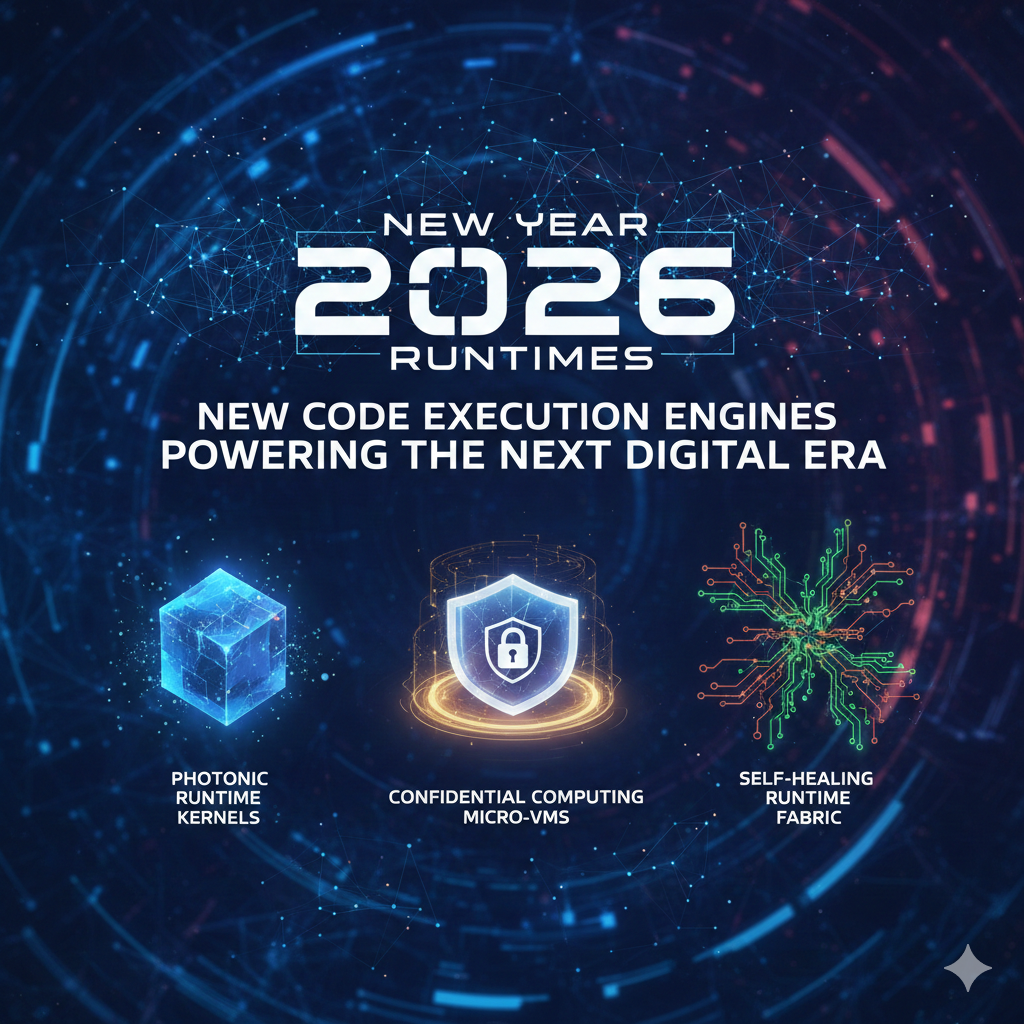
Source code is dead weight until transformed into executing instructions. New Year 2026 runtimes push that transformation into heterogeneous, energy-aware, formally verified engines.
Photonic Runtime Kernels
Silicon photonics graduate from lab curiosities to PCIe form factors. New Code runtimes schedule compute graphs across electronic cores and photonic accelerators, trading latency for joules. Because light doesn’t generate resistive heat, throughput per watt improves by an order of magnitude for linear algebra and cryptographic hashing. The runtime transparently falls back to electronic execution when coherence limits are hit, ensuring backward compatibility while Powering the Next Digital Era of sustainable hyperscale workloads.
Confidential Computing Micro-VMs
Data breaches erode consumer trust and regulatory goodwill. New Year 2026 micro-VMs boot inside hardware-based trusted execution environments whose firmware is formally verified down to the cycle level. Memory encryption keys rotate every few milliseconds; side-channel noise injection masks access patterns. Even root-privileged attackers observe only encrypted gibberish. These Software Technologies unlock multi-party analytics over sensitive datasets—health records, financial transactions—without moving raw bytes outside enclaves.
Self-Healing Runtime Fabric
Outages propagate faster than human on-call rotations can respond. New Code runtimes embed eBPF-style probes plus reinforcement-learning controllers that predict and patch failures in real time. If a memory leak surfaces, the runtime spawns an isolated replica, transfers connections, garbage-collects the leaky module, and hot-patches the binary. Mean-time-to-recovery shrinks from minutes to milliseconds, Powering the Next Digital Era where downtime is an archaeological concept.
4. New Year 2026 Data Fabrics—New Code Storage Paradigms Powering the Next Digital Era
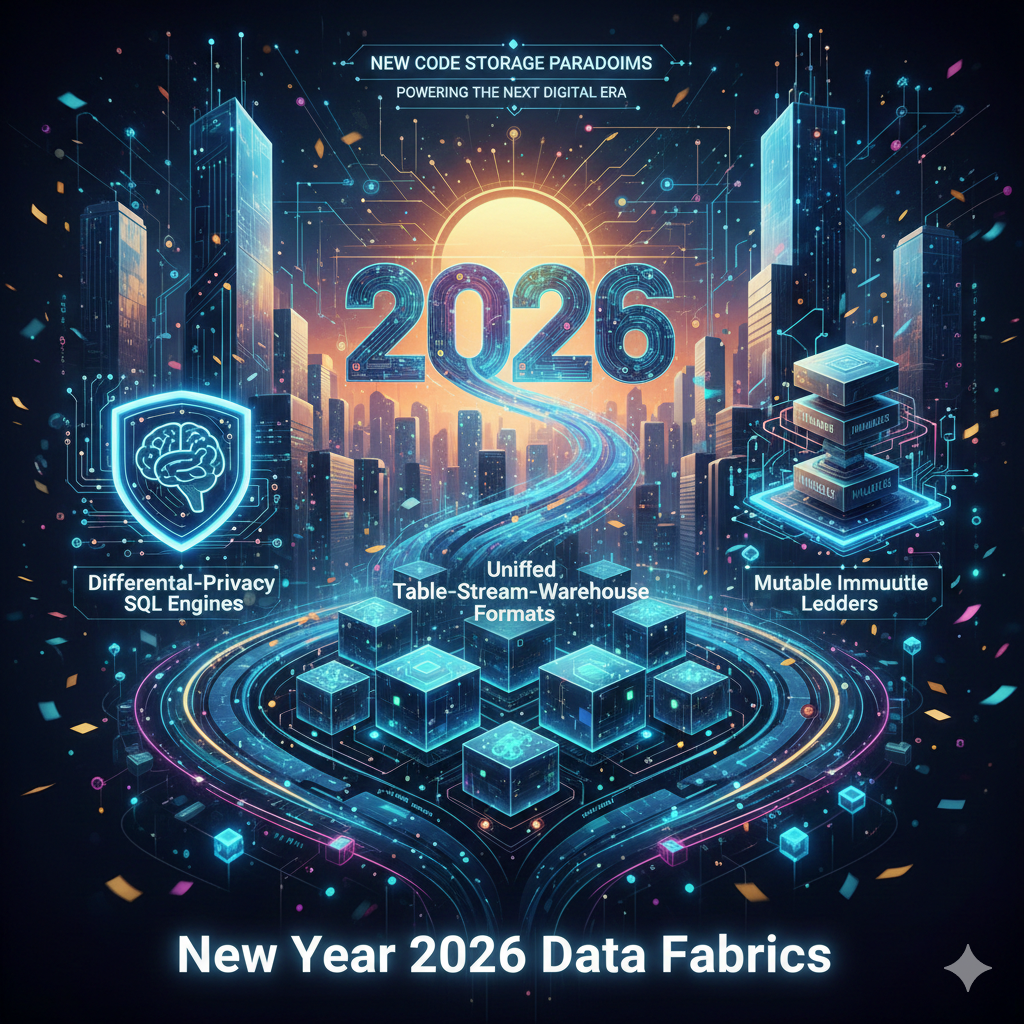
Data is the new oil, but unrefined crude gums up engines. New Year 2026 Data Fabrics unify transactional, analytical, and AI workloads under declarative governance.
Unified Table-Stream-Warehouse Formats
Lambda architectures bifurcated batch and streaming paths, doubling cost and complexity. New Code storage layers adopt open table formats that treat streams as unbounded tables and warehouses as materialized views. Transactions, upserts, and time-travel queries coexist without locks or dual writes. The same Fabric serves clickstream analytics, audit trails, and training datasets, collapsing silos Powering the Next Digital Era of real-time insight.
Differential-Privacy SQL Engines
Regulations impose fines per exposed record. New Year 2026 query engines embed epsilon-differential privacy at the planner level. Analysts write ordinary SQL; the rewriter injects calibrated noise and enforces budget caps across sessions. The result is statistically accurate aggregates without re-identifiable outliers, enabling cross-border data collaboration that Software Technologies could never previously guarantee.
Mutable Immutable Ledgers
Immutability simplifies auditability but complicates corrections. New Code data fabrics implement chameleon hashes: records appear immutable to verifiers yet can be superseded by authorized mutator keys. Courts can order redaction without shattering chain integrity; supply-chain partners can correct shipping errors without double-spend vulnerabilities. The Fabric thus balances GDPR’s right to erasure with blockchain-level trust, Powering the Next Digital Era of accountable transparency.
5. New Year 2026 AI Co-Creation—New Code Generators Powering the Next Digital Era
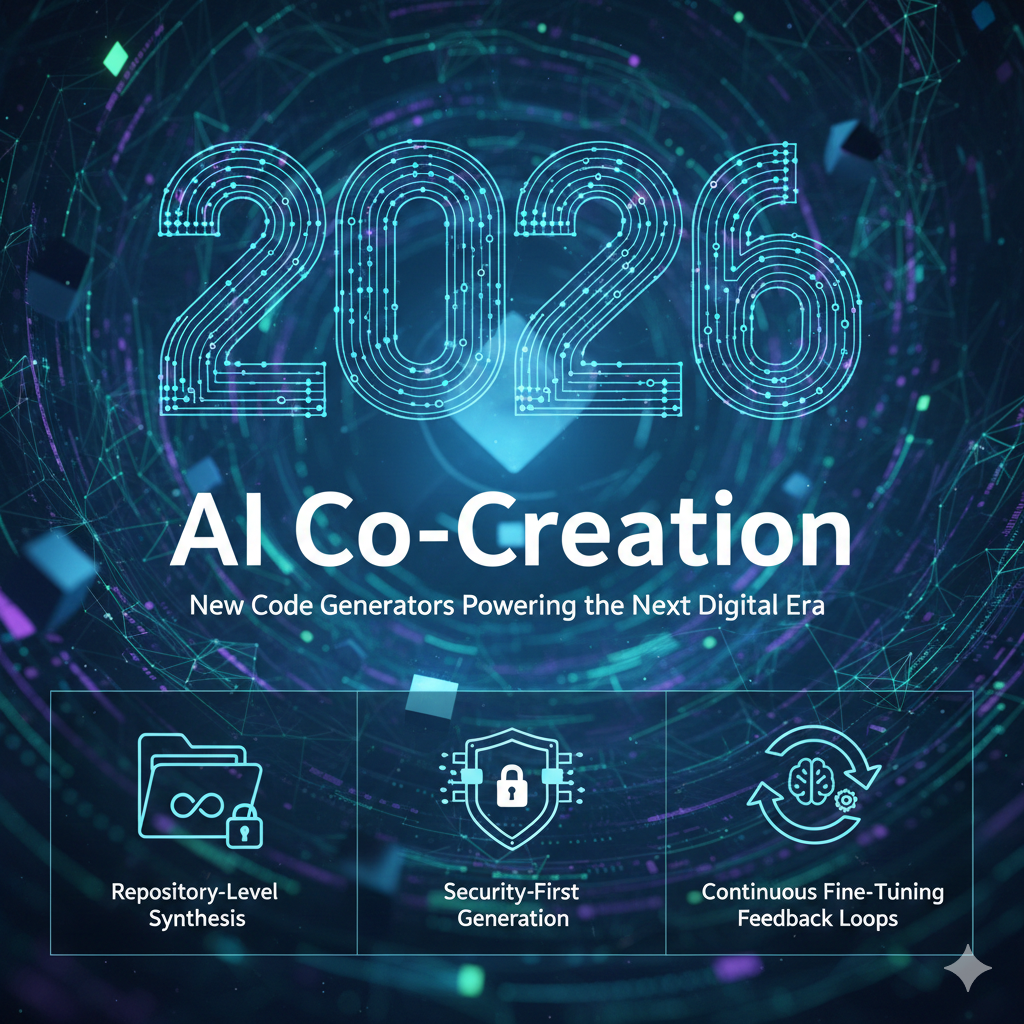
The stereotype of AI writing toy scripts is obsolete. New Year 2026 models reason over million-token contexts spanning entire repositories, legal contracts, and chip netlists.
Repository-Level Synthesis
Instead of autocompleting a function, generative systems ingest tickets, architecture docs, and test logs to propose full features. The New Code emerges with embedded traceability links: every line cites the requirement or test that justifies it. Review becomes an act of auditing machine-written proofs rather than decoding human intent, compressing release cycles from weeks to hours.
Security-First Generation
Prompt injection and hallucinated dependencies are attack vectors. New Code generators train on curated corpora whose provenance is cryptographically signed. Output passes through symbolic verifiers that search for OWASP top-ten patterns before suggesting commits. These Software Technologies reduce defect density below human baselines while Powering the Next Digital Era of trustworthy software supply chains.
Continuous Fine-Tuning Feedback Loops
Models stale quickly as libraries evolve. New Year 2026 pipelines continuously retrain on accepted pull-requests, using federated techniques that respect corporate confidentiality. The generator’s worldview refreshes nightly, ensuring suggestions track API deprecation, CVE disclosures, and performance regressions in real time.
6. New Year 2026 Security Fabric—New Code Defenses Powering the Next Digital Era
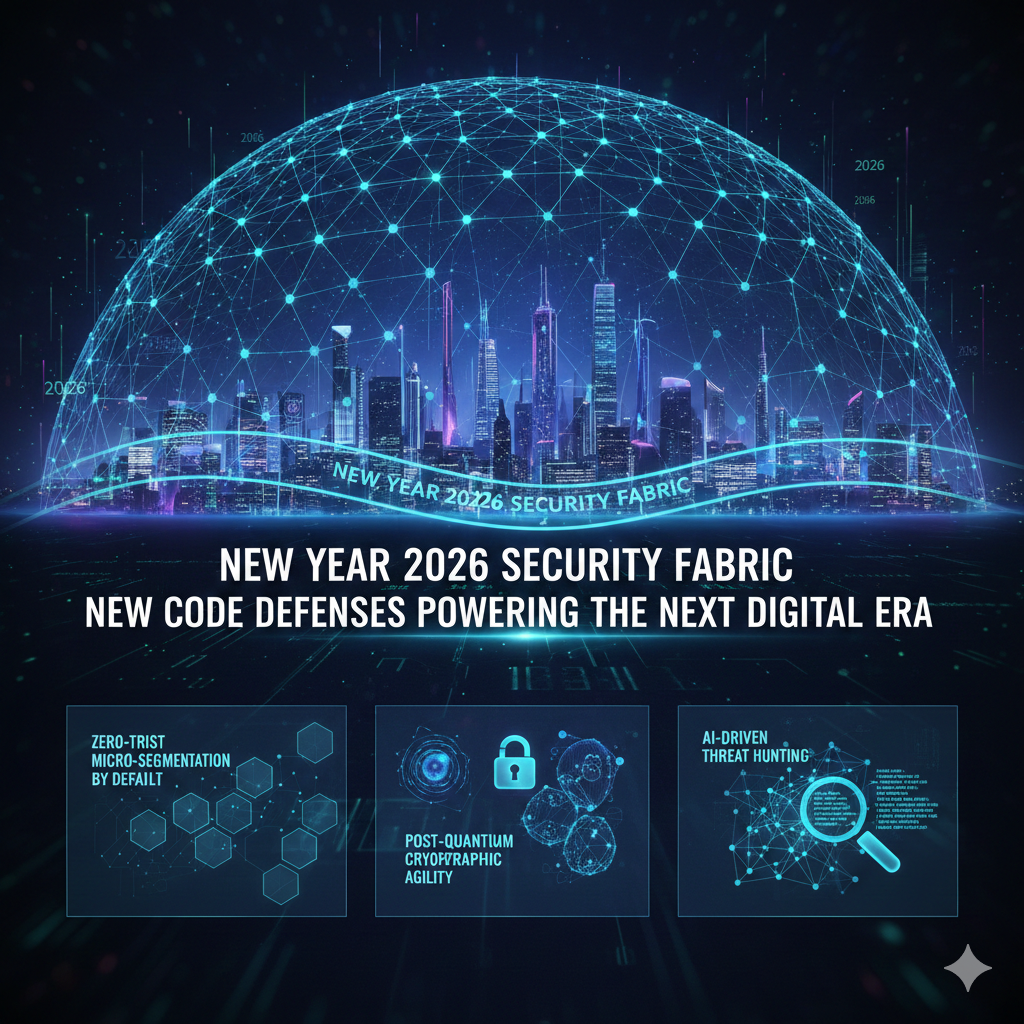
Threat actors leverage the same AI advances as defenders. New Year 2026 Security Fabric elevates resilience from patch management to predictive immunity.
Zero-Trust Micro-Segmentation by Default
Every callable earns its own identity, signed by hardware roots of trust. Policies deny all communication unless explicitly allowed by intent manifests. New Code compilers inject segmentation rules alongside business logic, making lateral movement exponentially harder. The Fabric thus turns zero-trust from PowerPoint to compile-time guarantee, Powering the Next Digital Era of frictionless security.
Post-Quantum Cryptographic Agility
“Harvest now, decrypt later” attacks incentivize early adoption of lattice-based algorithms. New Year 2026 libraries expose abstract crypto providers; swapping from elliptic curves to module learning-with-errors requires only a config change. Automated migration scanners flag legacy call sites, ensuring Software Technologies survive cryptanalytic breakthroughs without forklift upgrades.
AI-Driven Threat Hunting
Signature-based detection collapses under polymorphic malware. Self-supervised models learn baseline kernel behaviour; anomalies surface as interactive attack stories. Analysts explore graphs that link syscall traces, network flows, and memory dumps, reducing mean-time-to-detect from days to minutes. The New Code defenders operate at machine speed, Powering the Next Digital Era where humans strategize while automations execute.
7. New Year 2026 Decentralized Ledgers—New Code Trust Networks Powering the Next Digital Era
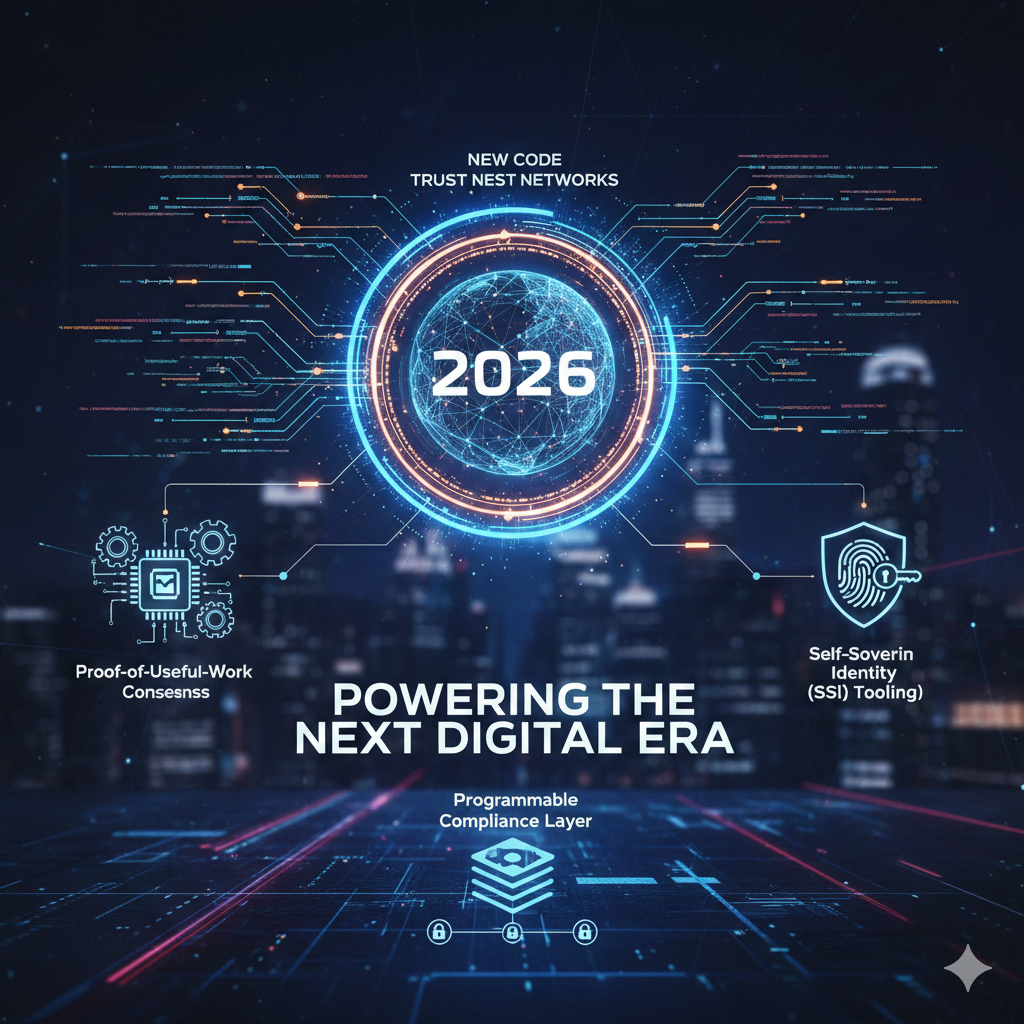
Centralized trust anchors—CAs, payment rails, notaries—are single points of failure. New Year 2026 ledgers decentralize trust without sacrificing performance or planet.
Proof-of-Useful-Work Consensus
Traditional proof-of-work squanders energy on hash puzzles. New Code consensus channels compute toward scientific workloads: protein folding, climate modelling, or distributed FFTs. Miners earn rewards while advancing human knowledge, transforming environmental criticism into ecological dividend, Powering the Next Digital Era of virtuous cycles.
Self-Sovereign Identity (SSI) Tooling
Users control identifiers anchored on ledgers, presenting zero-knowledge proofs to service providers. Login without passwords, age verification without birthdate leakage, credit scoring without centralized bureaus—these Software Technologies restore privacy while complying with travel rule and anti-money-laundering mandates.
Programmable Compliance Layer
Smart contracts encode jurisdictional rules as on-chain logic. Tokens can freeze if OFAC-listed addresses interact; tax withholdings execute atomically at transfer time. Regulators run read-only nodes, gaining real-time auditability without backdoors. New Year 2026 thus marries innovation with oversight, Powering the Next Digital Era of regulated decentralization.
8. New Year 2026 Immersive Interfaces—New Code Experiences Powering the Next Digital Era
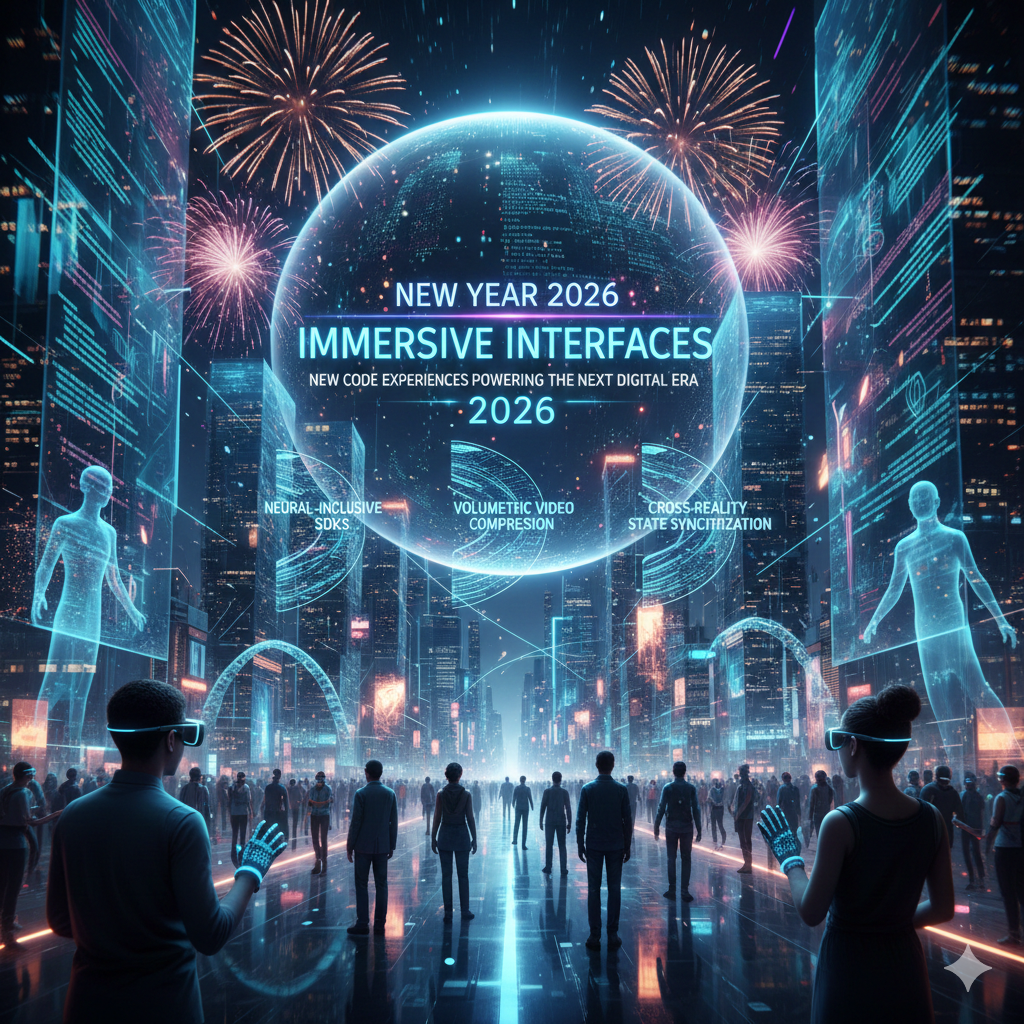
Rectangular screens are cognitive cages. New Year 2026 immersive interfaces dissolve boundaries between physical and digital, requiring New Code paradigms for spatial, haptic, and neural interaction.
Neural-Inclusive SDKs
Non-invasive brain-computer interfaces (BCIs) reach consumer price points. SDKs expose semantic signal APIs: intent probability vectors instead of raw EEG volts. Developers craft hands-free typing apps or focus-adaptive UIs that dim distractions when concentration dips. Ethical constraints—consent, data ownership, mental privacy—are enforced by confidential compute enclaves, Powering the Next Digital Era of neuro-inclusive computing.
Volumetric Video Compression
Holographic telepresence demands gigabits per second. New Code codecs exploit plenoptic semantics: transmit geometry shaders plus texture atlases rather than pixel arrays. Receivers render photorealistic avatars at fractional bandwidth, enabling global holographic conferences without clogging backbones.
Cross-Reality State Synchronization
Users hop between phones, headsets, and car windscreens throughout the day. State Fabric ensures that a spreadsheet cell edited in AR persists instantly on every surface, complete in the event of network partitions. Operational transforms handle merge conflicts for 3-D object placement, ensuring consistent immersive continuity, Powering the Next Digital Era of seamless experience.
9. New Year 2026 Sustainability Toolchain—New Code Metrics Powering the Next Digital Era
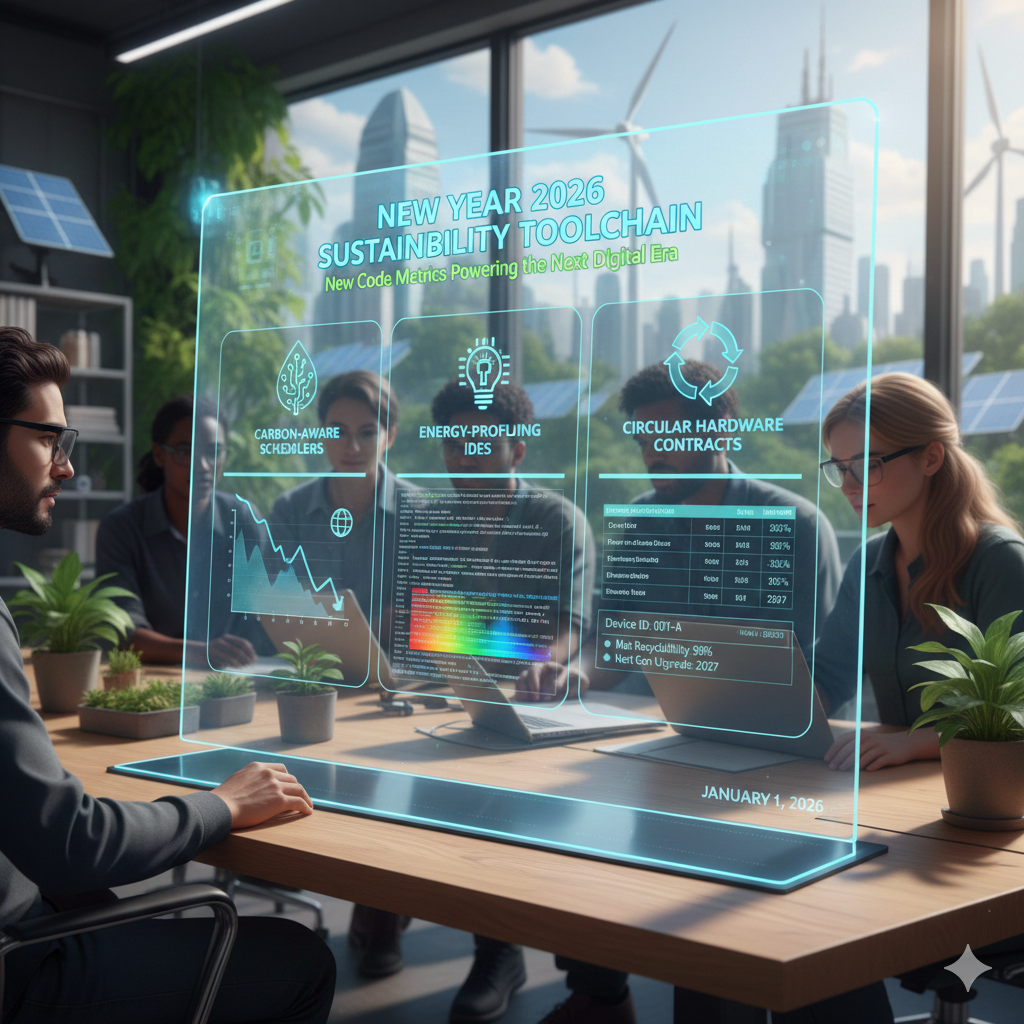
Carbon is a compile-time externality no longer. New Year 2026 embeds energy and emissions budgets into every stage of the development lifecycle.
Carbon-Aware Schedulers
Workloads migrate to regions where renewable output peaks. Batch jobs pause when grids switch to coal; latency-critical services trade milliseconds for green joules. APIs expose marginal carbon intensity to callers, enabling client code to make eco-routing decisions, Software Technologies that quite literally Power the Next Digital Era with cleaner watts.
Energy-Profiling IDEs
Developers see live wattage estimates per line of code. A loop unroll saves 3 mJ; an inefficient regex costs 50 mJ. Gamified leaderboards reward green refactorings, turning sustainability into an engineering sport. The New Code that ships is leaner, faster, and planet-friendlier by design.
Circular Hardware Contracts
Cloud instances embed retirement timestamps. When efficiency drops below a threshold, workloads migrate and hardware is re-manufactured into edge nodes or IoT sensors. Blockchain-based provenance tracks component reuse, ensuring rare-earth recycling and minimizing e-waste. The toolchain thus closes the loop between code and atoms, Powering the Next Digital Era of circular tech economies.
10. New Year 2026 Beckons Every Developer to Author New Code Software Technologies Powering the Next Digital Era
The nine layers surveyed—languages, frameworks, runtimes, data fabrics, AI co-creation, security, ledgers, immersive interfaces, and sustainability—form a towering but permeable stack. No single actor owns it; every contributor, from open-source hobbyist to Fortune-500 architect, can push commits that ripple outward at light speed. New Year 2026 is more than a calendar milestone: it is a call to adventure. The primitives are ripe, the specifications are open, and the ethical imperatives are urgent. Whether you optimize a photonic kernel, craft a privacy-preserving query planner, or teach a generative model to emit safer templates, your pull request becomes part of the collective New Code base that will define how humanity works, plays, and thrives.
Powering the Next Digital Era is not a slogan; it is an obligation measured in kilowatts saved, breaches averted, and minds included. Fire up your editor, set your branch to 2026, and ship the future—one commit at a time.
Leave a Reply