

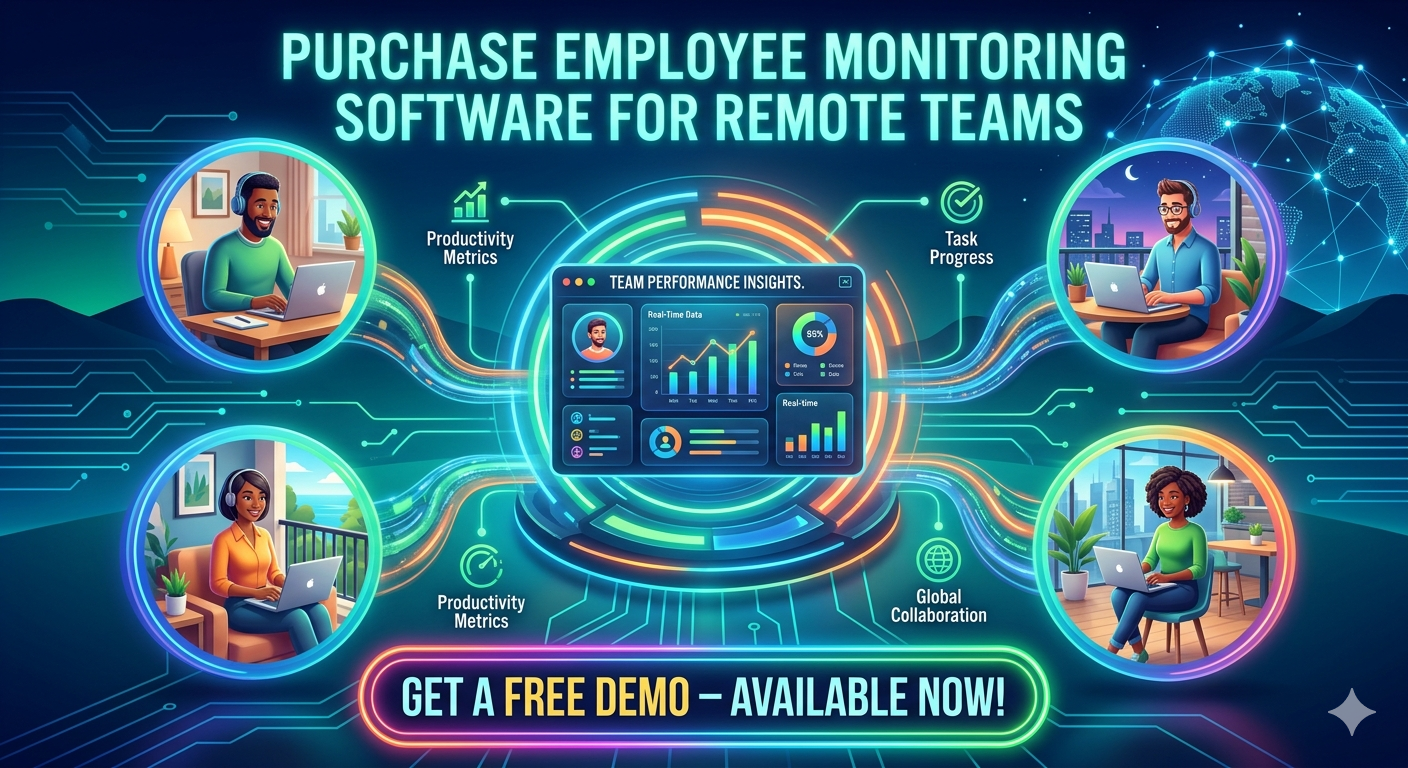
In today’s digital business environment, remote work has become a standard practice rather than an exception. Organizations are increasingly relying on distributed teams, which has created a strong need for tools that ensure productivity, accountability, and efficiency. One of the most effective solutions to address these challenges is employee monitoring software. If you are planning to purchase employee monitoring software, understanding its role and benefits is essential for making the right investment decision.
Employee monitoring software is a powerful digital solution designed to track, record, and analyze employee activities during working hours. It helps businesses gain complete visibility into how employees spend their time, what tasks they are performing, and how productive they are throughout the day. By leveraging such tools, organizations can streamline workflows, improve performance, and maintain operational efficiency even when teams are working remotely.
Why Businesses Need Employee Monitoring Software for Remote Teams
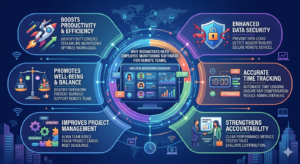
Managing remote teams comes with several challenges, including limited supervision, communication gaps, and difficulty in tracking productivity. This is where employee monitoring software becomes a crucial asset for modern businesses. It provides real-time insights into employee activities, allowing managers to understand work patterns and identify inefficiencies.
The use of remote employee monitoring tools enhances accountability, as employees tend to stay more focused when they know their work is being tracked transparently. It also enables data-driven decision-making by offering detailed reports and analytics that highlight performance trends. In addition, monitoring software strengthens data security by detecting unusual activities and preventing potential risks. Overall, it bridges the gap between remote and in-office teams, ensuring seamless collaboration and efficient management.
Key Features to Consider Before You Buy Employee Monitoring Software
When planning to buy employee monitoring software for remote teams, it is important to evaluate the features that align with your business needs. A reliable solution should include real-time tracking capabilities that allow managers to monitor employee activities as they happen. Screen monitoring features provide visual proof of work through screenshots or recordings, ensuring transparency.
Application and website tracking help businesses understand how employees utilize their time online, while automated timesheets simplify attendance management by recording working hours accurately. Productivity analytics offer valuable insights into employee performance, enabling organizations to identify strengths and areas for improvement. Cloud-based access ensures flexibility and remote accessibility, while alerts and notifications keep managers informed about unusual activities. Integration capabilities further enhance efficiency by connecting the software with existing HR and project management tools.
Types of Employee Monitoring Software
Employee monitoring software is available in different types, with cloud-based and on-premise solutions being the most common. Cloud-based employee monitoring software is widely preferred due to its flexibility, scalability, and ease of use. It allows businesses to monitor employees from anywhere without requiring complex infrastructure, making it ideal for remote teams.
On the other hand, on-premise software is installed locally on company servers and offers greater control over data. However, it requires a higher initial investment and ongoing maintenance, which may not be suitable for all organizations. For most modern businesses, cloud-based solutions provide a more practical and cost-effective approach to workforce monitoring.
Employee Monitoring Software Pricing and Cost Breakdown
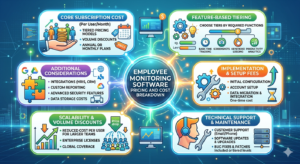
Understanding employee tracking software pricing is a crucial step before making a purchase decision. Most monitoring tools operate on a subscription-based model, where businesses pay a monthly or yearly fee depending on the number of users and features included. These costs can vary significantly, starting from basic plans for small teams to advanced enterprise solutions with extensive functionalities.
SaaS-based pricing models are popular because they include regular updates, customer support, and scalability options. Some providers also offer free trials or demo versions, allowing businesses to test the software before committing. In contrast, certain enterprise solutions provide one-time licensing options, which involve a higher upfront cost but eliminate recurring fees. Choosing the right pricing model depends on your budget, business size, and long-term goals.
Best Employee Monitoring Software for Business
When looking to purchase employee monitoring software online, businesses have a wide range of options to choose from. Different tools offer unique features tailored to various industries and requirements. Some solutions focus on advanced analytics and AI-driven insights, while others emphasize affordability and user-friendly interfaces.
Selecting the best software requires careful comparison of features, pricing, and performance. It is important to consider how well the software aligns with your business objectives and whether it can scale as your organization grows. Testing multiple tools through demos or trial versions can help you make a more informed decision and ensure that you choose the right solution for your team.
How to Choose the Right Employee Monitoring Software
Choosing the right employee monitoring software involves evaluating several key factors. Business size plays a significant role, as small businesses may require basic tracking features while larger enterprises need more advanced capabilities and integrations. Remote work requirements should also be considered to ensure that the software effectively supports distributed teams.
Budget is another important factor, as businesses must balance cost with the value provided by the software. Data security is critical, especially when dealing with sensitive information, so it is essential to choose a solution with strong security measures and compliance standards. Ease of use is equally important, as a user-friendly interface ensures smooth adoption by both employees and managers.
Use Cases of Employee Monitoring Software
Employee monitoring software is widely used across different industries to improve efficiency and productivity. In IT and software companies, it helps track developer performance and project progress, ensuring timely completion of tasks. Customer support teams use monitoring tools to evaluate response times and enhance service quality.
Freelancers and agencies benefit from accurate time tracking, which simplifies billing and project management. Large enterprises rely on monitoring software to manage extensive remote teams, ensuring consistency and productivity across departments. Regardless of the industry, these tools play a vital role in optimizing operations and achieving business goals.
Advantages and Challenges of Employee Monitoring Software
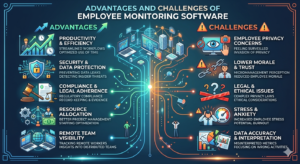
Employee monitoring software offers numerous benefits, including increased productivity, better time management, and enhanced transparency. By providing detailed insights into employee activities, it helps organizations identify inefficiencies and improve workflows. These tools also support better decision-making by offering data-driven insights into performance.
However, there are certain challenges that businesses need to address. Privacy concerns are one of the primary issues, as excessive monitoring can make employees feel uncomfortable. Resistance to monitoring is another challenge, particularly if employees are not properly informed about its purpose. Over-monitoring can also lead to stress and reduced morale. To overcome these challenges, businesses should adopt a transparent and ethical approach, clearly communicating the benefits and ensuring that monitoring is used responsibly.
Why You Should Purchase Employee Monitoring Software Now
With the increasing adoption of remote work, investing in employee monitoring software has become essential for businesses that want to remain competitive. These tools provide valuable insights into employee performance, enabling organizations to improve efficiency and productivity.
By implementing a workforce monitoring system, businesses can achieve better team coordination, enhanced performance tracking, and more effective resource management. This not only improves day-to-day operations but also contributes to long-term growth and success. In a highly competitive market, having the right tools in place can make a significant difference in achieving business objectives.
Demo Available – Try Before You Buy
One of the most effective ways to evaluate employee monitoring software is by trying a demo before making a purchase. Most providers offer free demos or trial periods, allowing businesses to explore features and test usability. This helps organizations understand how the software works in real-world scenarios and whether it meets their specific requirements.
A demo also allows businesses to compare different tools, evaluate their performance, and identify the best option for their needs. By taking advantage of these opportunities, companies can make informed decisions and ensure that they invest in the right solution for their remote teams.
Conclusion
Purchasing employee monitoring software for remote teams is a strategic decision that can significantly enhance business operations. From real-time tracking and productivity analysis to improved security and workflow optimization, these tools offer a comprehensive solution for managing remote employees effectively.
Whether you are a startup, small business, or large enterprise, choosing the right employee monitoring software can help you achieve greater efficiency, transparency, and growth. By understanding your requirements, comparing available options, and testing demos, you can select a solution that aligns perfectly with your business goals and supports your long-term success.
Leave a Reply