


The Evolution of Business Workflow Management
In the fast-paced world of business, staying organized and efficient isn’t just a luxury—it’s a necessity. The days of managing leads through spreadsheets and tracking tasks via emails are long gone. Modern businesses require dynamic, automated, and scalable solutions that can streamline their entire workflow from start to finish. This is where a Corporate CRM (Customer Relationship Management) system becomes a game-changer.
A Corporate CRM for workflow management doesn’t just help you manage customer relationships—it redefines how your organization functions internally. From coordinating departments to ensuring tasks are executed seamlessly, a CRM provides the structure that keeps everything running smoothly. Think of it as the backbone of your operations, ensuring every moving part of your business—from sales to customer support—works in perfect harmony.
In this article, we’ll explore why every business, regardless of size or industry, needs a Corporate CRM. You’ll learn how it enhances productivity, improves customer relationships, and creates the kind of workflow that drives long-term success.
Understanding What a Corporate CRM Is
A Corporate CRM is much more than a simple contact database—it’s an all-in-one solution designed to manage, automate, and optimize every aspect of your business’s interactions, processes, and workflows. It collects, organizes, and analyzes customer data, empowering teams to make informed decisions that lead to better outcomes.
At its core, a CRM system centralizes business information. Instead of scattered notes, disjointed communication, and lost opportunities, a CRM offers a single source of truth. It integrates customer communications, marketing campaigns, project tracking, and workflow automation in one platform.
How CRM Systems Differ from Traditional Management Tools

Unlike traditional tools that focus on a single function (like spreadsheets for data or email tools for communication), a Corporate CRM unites all these functions under one roof. It acts as both a data management hub and a process automation engine, reducing redundancy and eliminating bottlenecks that slow productivity.
Core Functions of a Corporate CRM
- Data centralization: One unified system for all customer and project data.
- Workflow automation: Automate repetitive tasks and follow-ups.
- Collaboration tools: Improve communication between departments.
- Analytics and reporting: Gain real-time insights for better decisions.
- Customer engagement: Track and personalize every client interaction.
With these features, businesses can streamline workflows, enhance performance, and focus more on strategic growth rather than operational chaos.
The Role of a Corporate CRM in Modern Business Operations
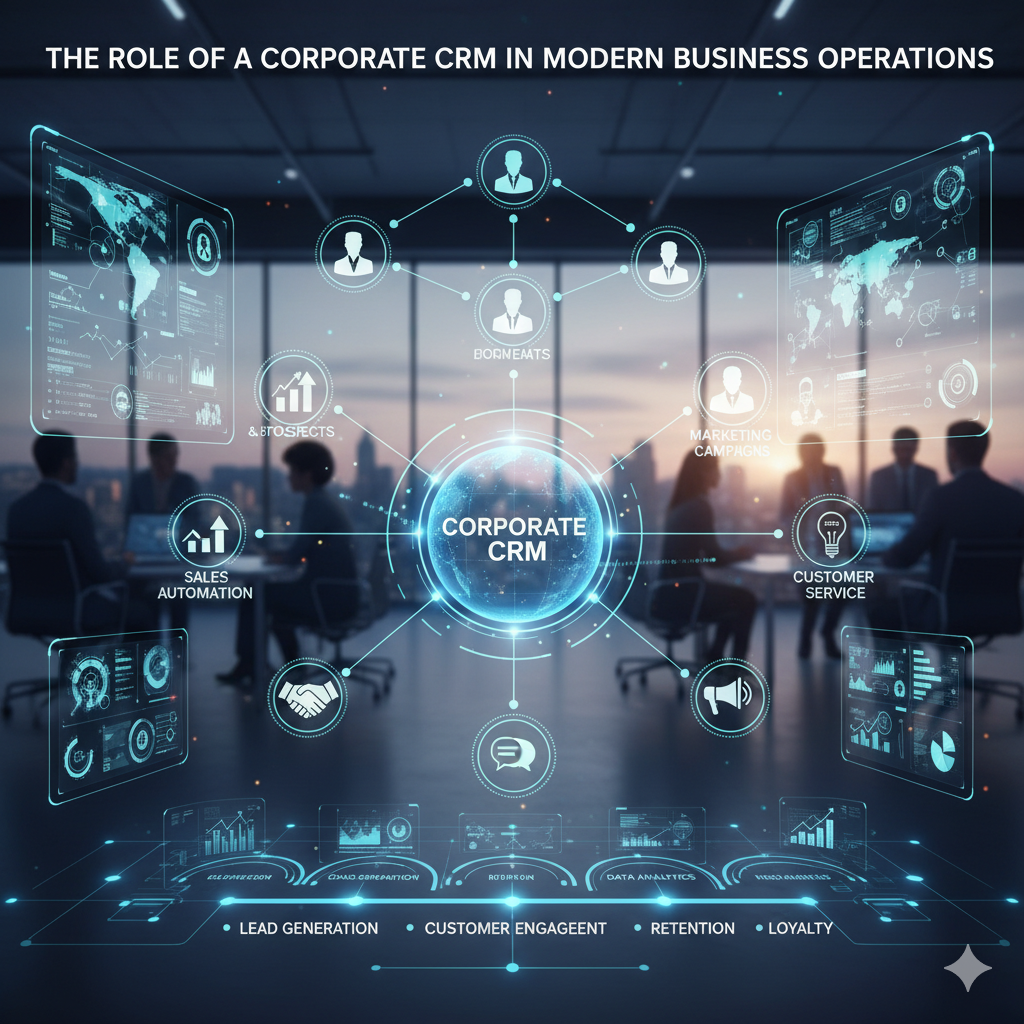
A Corporate CRM system acts as the central nervous system of your business operations. It ensures that data flows seamlessly between departments and that no important task or customer inquiry slips through the cracks.
Streamlining Internal Communication
One of the biggest challenges in large organizations is miscommunication. A CRM eliminates these silos by creating a shared workspace where every department—from marketing to support—can collaborate in real-time. It allows teams to share updates, assign tasks, and track progress without endless email threads or confusion about who’s responsible for what.
Enhancing Customer Relationship Management
While the “C” in CRM stands for “customer,” its impact goes beyond sales. A Corporate CRM enables businesses to understand their customers’ needs deeply. It stores every interaction, purchase history, and feedback, allowing your team to deliver personalized experiences.
When a customer calls or messages, your team can instantly access their history and preferences, turning a standard interaction into a meaningful engagement.
Why Workflow Automation Matters in Today’s Market
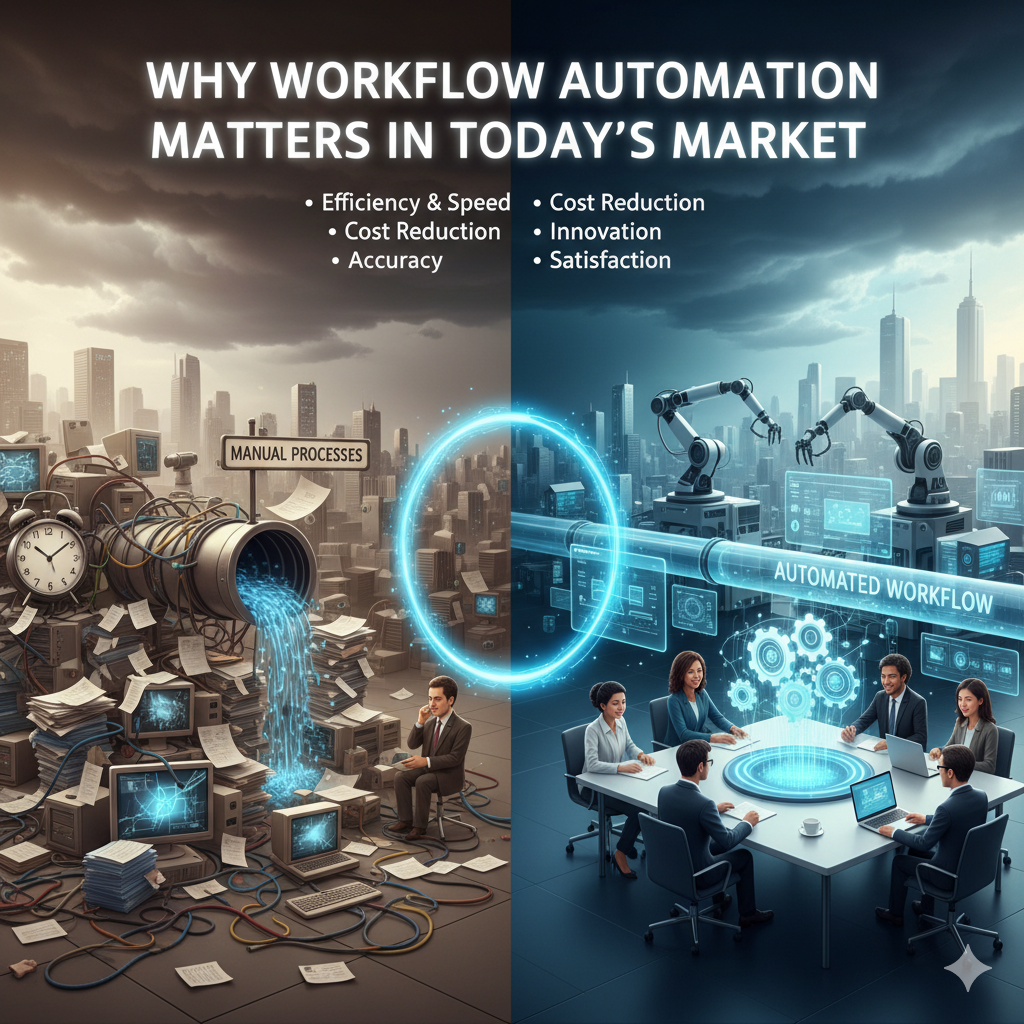
Automation isn’t just a buzzword anymore—it’s the foundation of efficiency. Businesses that automate routine workflows save time, reduce costs, and eliminate human error.
The Link Between Efficiency and Profitability
Efficiency directly impacts profitability. When tasks like lead follow-ups, appointment scheduling, or invoice management are automated, your team can focus on high-value activities like building relationships and closing deals. A Corporate CRM for workflow automation ensures that no lead is forgotten and no process is delayed.
Reducing Human Error Through Automated Workflows
Manual processes are prone to mistakes—typos, missed deadlines, or overlooked follow-ups can lead to lost revenue. Automation within a CRM minimizes these risks. Every step of the workflow—from data entry to customer communication—is standardized, ensuring accuracy and consistency across the board.
Automation also enhances accountability. Every task is logged and tracked, making it easy to identify bottlenecks and improve overall performance.
Key Benefits of Using a Corporate CRM for Workflow Optimization
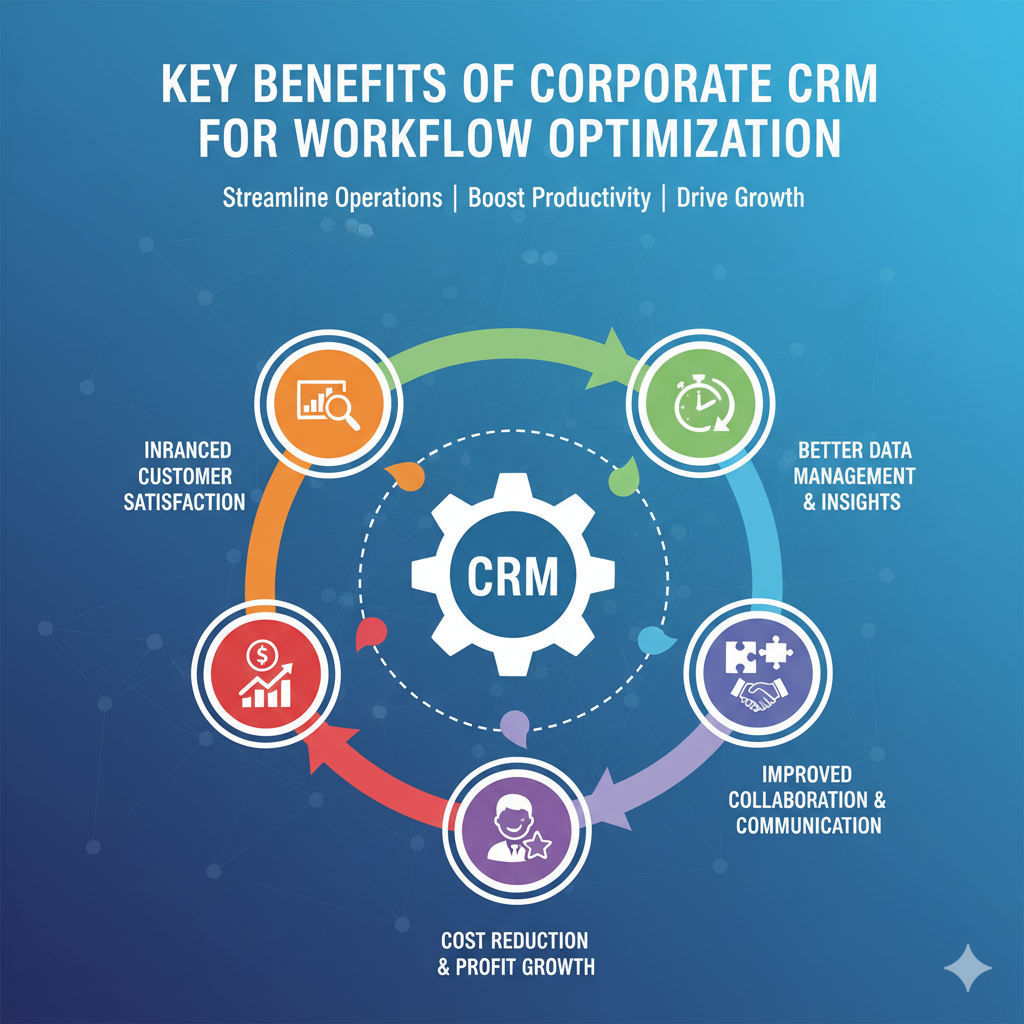
When a business integrates a Corporate CRM for workflow optimization, it gains more than just a tool—it gains a system that reshapes how work is done. From improving team performance to ensuring smooth communication, the benefits are far-reaching and measurable.
Boosting Productivity Across Teams
Every business wants its teams to perform at their peak. However, productivity often suffers when employees juggle multiple tools or manually handle repetitive tasks. A Corporate CRM centralizes operations and automates routine jobs—sending follow-up emails, updating task statuses, or tracking client communication—freeing up valuable time for strategic work.
Imagine your sales team no longer worrying about missed follow-ups because the CRM automatically notifies them when to reach out to a lead. Or your support team having all customer data at their fingertips, eliminating the need to dig through old emails. This seamless automation keeps everyone focused on what truly matters—growth and client satisfaction.
Moreover, a CRM provides clear visibility into performance metrics, enabling managers to track progress and allocate resources effectively. When everyone knows their tasks and deadlines, productivity naturally soars.
Ensuring Data Consistency and Accessibility
One of the most significant pain points for businesses is inconsistent data. When data is scattered across spreadsheets, emails, and messaging platforms, errors become inevitable. A Corporate CRM for workflow management eliminates these inconsistencies by centralizing data storage.
Every team member can access real-time, updated information from one platform—no more conflicting details or duplicate records. Whether it’s sales numbers, client profiles, or project timelines, your CRM keeps everything synchronized and accurate.
Additionally, having data readily available improves decision-making. Executives and managers can use CRM-generated reports to analyze trends, identify gaps, and forecast performance with confidence. The result? A smoother, more reliable workflow that thrives on accuracy.
Improving Collaboration and Accountability
A corporate CRM promotes a culture of collaboration and accountability. With shared dashboards and task management features, teams can easily assign roles, set priorities, and monitor progress. Everyone knows who’s responsible for what—and that level of transparency eliminates confusion and boosts trust.
For example, when a marketing team launches a campaign, the sales team can immediately see which leads came in and act on them without delay. The CRM bridges departmental gaps, turning individual efforts into a unified workflow.
Accountability also increases because every activity is logged. If a delay occurs, managers can trace it back to the exact point in the process, ensuring smoother future operations.
Corporate CRM for Sales and Marketing Alignment

Sales and marketing departments are often misaligned, even though they depend on each other’s success. A Corporate CRM for workflow integration ensures that both departments operate cohesively toward shared goals.
Automating Lead Tracking and Nurturing
Lead management is one of the most powerful features of a CRM. Once a potential customer enters the system, the CRM automatically assigns, tracks, and scores the lead based on engagement level. This helps sales teams prioritize high-value prospects while marketing continues nurturing lower-intent leads.
Automation ensures that no lead is lost in the process. When a lead responds to an email campaign or downloads a brochure, the CRM records that interaction, updates their profile, and alerts the relevant team member. Every follow-up happens on time, increasing conversion rates.
Enhancing Campaign Management and ROI
For marketing teams, data is gold. A Corporate CRM for campaign management gives marketers the insights they need to design smarter, data-driven campaigns. They can track engagement rates, monitor lead sources, and calculate return on investment (ROI) for each campaign in real time.
The CRM also helps create targeted campaigns by segmenting audiences based on demographics, behaviors, or purchase history. This ensures that every message hits the right audience, resulting in higher engagement and better conversion rates.
When sales and marketing work within the same CRM ecosystem, every effort becomes aligned—from initial outreach to final sale—ensuring a seamless customer journey.
CRM Integration with Other Business Tools
To truly maximize efficiency, businesses must connect their CRM with other essential tools. A Corporate CRM integration strategy transforms your CRM into the command center of your operations.
Combining CRM with Project Management Systems
Project management and CRM often overlap. Integrating both allows teams to manage projects directly within their CRM interface. Tasks can be assigned, deadlines set, and progress tracked—without switching between platforms.
For instance, when a new client signs up, the CRM automatically creates a project, assigns team members, and sets milestones. This ensures that the workflow begins immediately and stays organized throughout the project’s life cycle.
Integrating CRM with Communication Platforms
Internal communication tools like chat or video conferencing apps are crucial for day-to-day operations. Integrating these with your CRM enables instant collaboration. Employees can share updates, files, and notes within the CRM, reducing reliance on external apps and keeping all data in one place.
The result? Faster decision-making, better communication, and a unified digital workspace where everything happens smoothly.
Customizing a Corporate CRM for Unique Business Needs
Every business has unique goals, structures, and workflows. The beauty of a Corporate CRM lies in its ability to adapt to these differences through customization.
Scalable Features for Growing Enterprises
As your business grows, so do your challenges. A good CRM scales effortlessly, adding new users, modules, and integrations without disrupting existing workflows. Whether you’re expanding your sales team or launching new service lines, your CRM grows alongside you.
Scalability ensures that your business never outgrows its systems—a critical advantage in competitive markets.
Configurable Dashboards for Better Insights
A CRM dashboard acts as your business’s command center. Custom dashboards allow teams to monitor the metrics that matter most to them. Sales teams can track conversion rates, marketing can view campaign performance, and management can analyze revenue trends—all in one place.
With these insights available in real time, businesses can make data-backed decisions faster and more effectively.
Data Security and Compliance in Corporate CRM Systems
In an age where data is the new currency, data protection in CRM systems is non-negotiable. A Corporate CRM provides robust security protocols that safeguard sensitive business and customer data from unauthorized access or breaches.
Protecting Sensitive Business Information
From encrypted storage to multi-factor authentication, CRM platforms are designed with advanced security measures. Every user’s access can be controlled based on roles, ensuring that confidential data is only available to authorized personnel.
Meeting Industry Standards and Regulations
Compliance with regulations like GDPR or CCPA isn’t optional—it’s mandatory. A reliable CRM helps businesses stay compliant by managing consent, storing communication preferences, and ensuring transparency in data handling.
When customers know their data is safe, it builds trust—an invaluable asset in today’s digital marketplace.
The Impact of a Corporate CRM on Customer Experience
Customer experience has become the defining factor that separates thriving businesses from struggling ones. A Corporate CRM for customer experience management empowers organizations to deliver personalized, consistent, and memorable interactions at every touchpoint.
Personalizing Client Interactions
Personalization isn’t just a nice-to-have feature anymore—it’s what customers expect. With a Corporate CRM, every email, phone call, or chat can be tailored to the customer’s needs and history. The CRM tracks previous purchases, preferences, and interactions, allowing your team to offer recommendations or solutions that feel individualized rather than generic.
Imagine walking into your favorite café, and the barista already knows your usual order. That’s how a CRM helps your customers feel—recognized, valued, and understood. Personalized service strengthens loyalty, increases repeat purchases, and enhances the overall customer experience.
Improving Response Time and Service Quality
Speed is everything in modern customer service. Delayed responses or inconsistent support can drive customers away. A Corporate CRM system streamlines the support process by assigning incoming tickets automatically, tracking status updates, and providing agents with full visibility into customer history.
Because all data is centralized, any representative can instantly view a customer’s issue, previous conversations, and purchase records. This means faster resolutions, fewer errors, and happier customers. Over time, these small improvements compound into a strong reputation for exceptional service.
Corporate CRM and Remote Work Efficiency
The global shift toward remote and hybrid work has changed how businesses operate. A Corporate CRM for remote teams ensures that productivity, collaboration, and accountability remain intact—no matter where employees are located.
Managing Distributed Teams Seamlessly
When your workforce is spread across locations or time zones, keeping everyone aligned can be tricky. A CRM bridges that gap by serving as a shared workspace where all communication, updates, and documentation happen in real-time.
Team members can log in, view project progress, update records, and communicate within the platform. This keeps remote teams organized and eliminates dependency on endless emails or messy spreadsheets.
Ensuring Transparency and Accountability
One of the biggest concerns with remote work is accountability. With a Corporate CRM workflow, every action—from task updates to communication logs—is recorded and timestamped. Managers can see exactly what’s being done and by whom, without micromanaging.
This not only boosts accountability but also builds trust among team members, knowing that their contributions are visible and valued.
Cost Efficiency and ROI of a Corporate CRM System
Investing in a Corporate CRM is not just a strategic decision—it’s a financial one. Businesses that use CRM systems effectively see measurable returns in the form of increased revenue, reduced operational costs, and better resource utilization.
Reducing Operational Costs with Automation
One of the most immediate benefits of implementing a Corporate CRM for workflow automation is cost reduction. Tasks that once required manual input—such as data entry, scheduling, or client follow-ups—are now automated.
Automation reduces labor costs, minimizes human error, and improves turnaround time. Plus, by eliminating redundant software tools and integrating all functions into one platform, businesses can save significantly on software subscriptions and IT management.
Measuring Success Through Data Analytics
A CRM’s analytics tools offer deep insights into performance, customer behavior, and sales trends. With these reports, businesses can make data-backed decisions that drive revenue growth.
For example, analytics can show which campaigns generate the most qualified leads, which sales reps perform best, or which customer segments are most profitable. These insights help optimize strategies and boost ROI (Return on Investment) over time.
When every decision is guided by real-time data rather than guesswork, profitability naturally follows.
Common Challenges in Implementing a Corporate CRM
Despite its undeniable benefits, the journey to CRM adoption can present some obstacles. Understanding and addressing these challenges early can ensure smoother implementation and maximum efficiency.
Overcoming Employee Resistance to New Systems
Change is often met with resistance, especially when employees are comfortable with their existing tools. To combat this, management should clearly communicate the benefits of the new system. Demonstrating how the CRM simplifies daily tasks and boosts performance helps gain employee buy-in.
Additionally, involving key staff in the setup process gives them a sense of ownership, turning potential resistance into support.
Ensuring Proper Training and Onboarding
Even the most powerful CRM is ineffective without proper training. Businesses must invest in comprehensive onboarding programs that teach employees how to use the CRM’s features effectively.
Hands-on workshops, tutorials, and continuous support make adoption smoother. When users understand how the CRM improves their work, engagement and efficiency naturally increase.
Future Trends: The Next Generation of Corporate CRMs
As technology evolves, so does the potential of Corporate CRM systems. The next generation of CRMs goes beyond simple automation—it integrates artificial intelligence, predictive analytics, and mobile-first functionality.
AI and Predictive Analytics in CRM Workflows
Artificial Intelligence is transforming CRM systems into proactive business tools. AI-driven CRMs can predict customer behavior, suggest next-best actions, and even automate lead nurturing.
For example, predictive analytics can analyze past customer data to forecast which leads are most likely to convert or which clients might churn. This allows businesses to take action before issues arise, increasing retention and efficiency.
The Rise of Mobile CRM Applications
With the rise of mobile workforces, accessibility is key. Mobile CRM applications allow employees to access data, update records, and manage tasks directly from their smartphones or tablets.
Whether your sales team is on the road or your support team is working remotely, mobile access ensures business continuity. The ability to work anytime, anywhere adds flexibility and speed to daily operations—traits that are crucial in today’s fast-paced market.
Building a Stronger Workflow with Corporate CRM
In today’s competitive business environment, efficiency is everything. A Corporate CRM doesn’t just organize contacts—it revolutionizes how your company operates. From automating workflows to improving collaboration and enhancing customer relationships, it acts as the engine that drives growth and innovation.
Businesses that embrace a CRM system position themselves for long-term success. They experience fewer delays, better communication, and more satisfied customers—all while maximizing profitability.
If you want your organization to operate like a well-oiled machine, adopting a Corporate CRM for workflow optimization isn’t just an option—it’s a necessity.
FAQs
- What is the main purpose of a Corporate CRM?
A Corporate CRM helps businesses manage customer data, automate workflows, and streamline communication between departments, ultimately improving productivity and customer satisfaction. - How does a Corporate CRM improve workflow efficiency?
It automates repetitive tasks, centralizes data, and provides clear visibility into processes, allowing teams to collaborate more effectively and complete tasks faster. - Is a Corporate CRM suitable for small businesses?
Absolutely. Modern CRMs are scalable, meaning small businesses can start with essential features and expand as they grow. - How can a Corporate CRM enhance customer experience?
By tracking customer interactions and preferences, a CRM enables personalized communication and faster service, leading to stronger customer relationships. - What should businesses consider when choosing a Corporate CRM?
Key factors include ease of use, customization options, integration capabilities, data security, and scalability to support long-term growth.
Leave a Reply